The 7-Minute CITO Morning Ritual That Calms Kids Before the Test
Your child already feels the CITO stress — even if they say nothing. Three simple steps: move, breathe, connect.
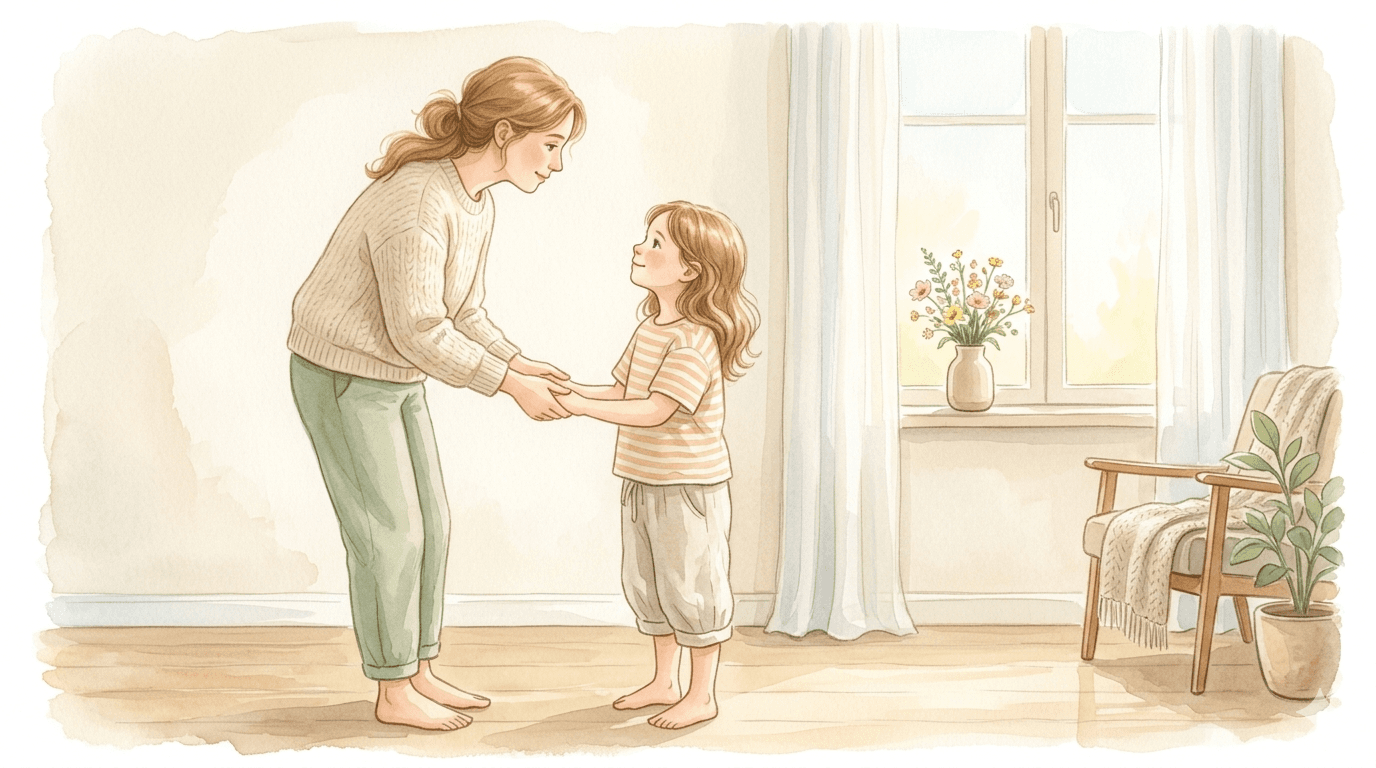
Your child doesn't need to say "I'm nervous about CITO" for you to know they feel it.
It shows up differently. Quieter at dinner. Restless at night. A knot in the stomach that has no words yet.
Children aged 5–12 absorb the emotional weight of expectations long before they can name what's happening in their bodies. The CITO week is one of those moments — especially for groep 8 kids, but felt by younger children too when they sense the pressure in the air at home.
The good news? You don't need a psychologist, a special programme, or an hour of your morning. You need 7 minutes and a willingness to do it together.
Why mornings matter for test performance
The nervous system doesn't care about CITO scores. It only knows: safe or threatened. When a child arrives at school in a state of low-grade stress — heart rate elevated, cortisol up — their prefrontal cortex (the thinking, reasoning part of the brain) is partially offline.
That's not a character flaw. It's biology.
But here's what's also biology: movement, slow breathing, and physical connection with a trusted adult all activate the parasympathetic nervous system — the calm branch. Within minutes, the body shifts from fight-or-flight to rest and focus.
That's the science behind this 7-minute ritual. Three steps. Any parent can do it. No equipment needed.
Step 1 — Wake the body (2 minutes)
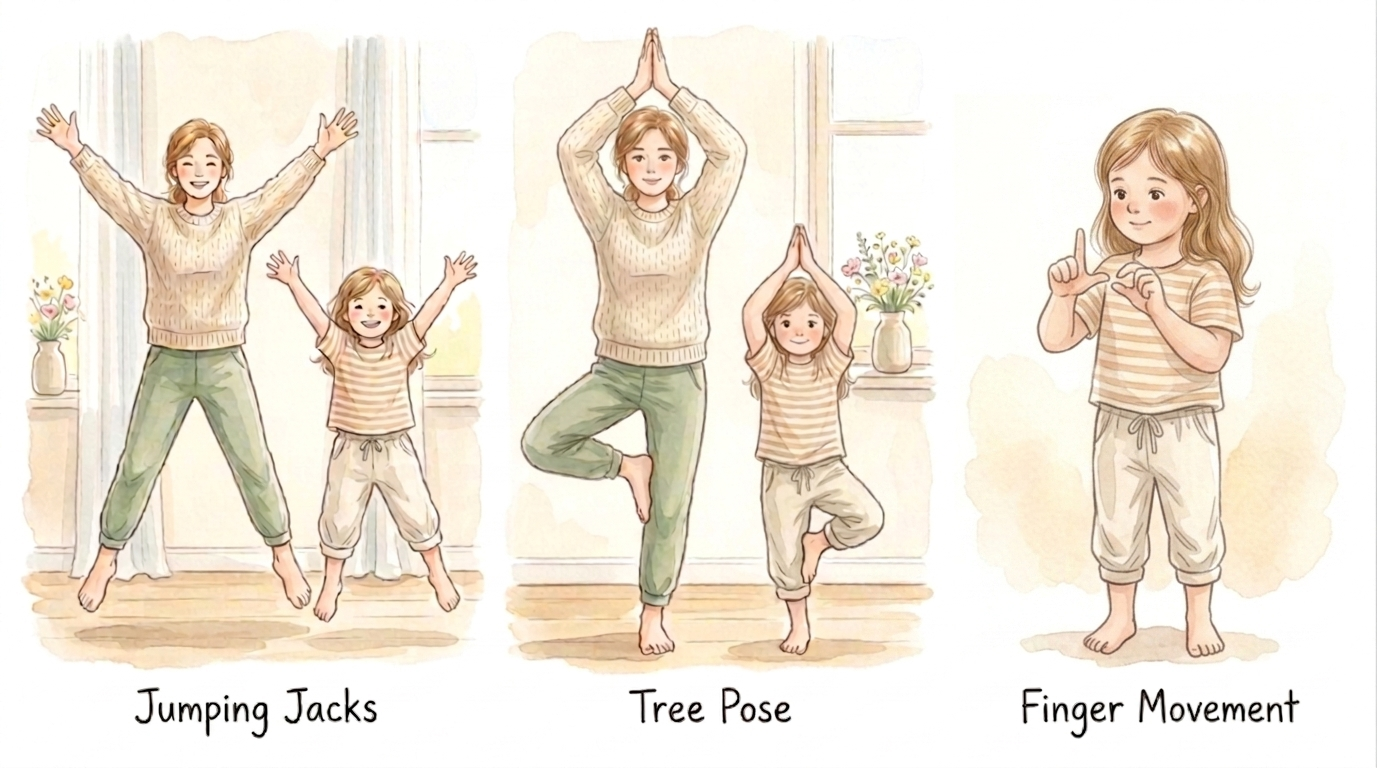
Start with movement to shift physical energy and switch the brain on:
- 10× Jumping Jacks — burns nervous energy, wakes the body up
- 10 seconds Tree Pose — balance requires focus, pulling attention into the present moment
- 2× Finger movement — cross-body coordination activates both brain hemispheres
Step 2 — Breathe with words (3 minutes)
Five slow breaths. Do them together, one at a time:
- Breath 1 → Inhale through the nose 🌸 (smell the flower)
- Breath 2 → Exhale through the mouth 🕯️ (blow the candle out)
- Breath 3 → Inhale + exhale, whisper "I am calm."
- Breath 4 → Inhale + exhale, whisper "I am strong."
- Breath 5 → Inhale + exhale, whisper "I can do this."
Speak them softly together. Affirmations spoken on the exhale are absorbed differently than words read on a page — the nervous system hears them as truth.
Step 3 — Connect (2 minutes)
Hold both of your child's hands. Look them in the eyes. And say — slowly, meaning it:
"No matter what happens today — I will always love you."
No score changes that. No test result changes that. And your child needs to hear it from you — not just assume it.
Why the connection step is the most important
The movement wakes the body. The breathing calms the nervous system. But the connection step is the one that actually removes the pressure.
Much of a child's CITO anxiety isn't about the test itself — it's about the fear of disappointing you. Children as young as 7 have already internalised the idea that certain outcomes make them more or less lovable.
When you say those words and mean them — when you look them in the eyes and let it land — you give your child permission to just do their best. That's when real performance happens.
Try it tomorrow morning
Seven minutes. Before breakfast, before the school bag, before the rush.
You don't have to wait for CITO week to start. This ritual works on any school morning. Children who start their day with movement, breath, and connection arrive at school regulated — ready to learn, ready to focus, ready to show what they know.
A parent who tried this with her children reported fewer morning meltdowns after just one week. Not because the mornings got easier — but because the children had a tool.
Want the structured version?
At The Mindful Kids, this is exactly what we teach children aged 5–12 in our weekly classes — body, breath, and emotional connection through movement and story. If you'd like your child to learn these tools in a group setting with other kids, the first class is completely free.