For home or after-school care · 5 minutes
After-school reset
Stretch and move first, then finish quietly on the floor.
- 1. Star Pose1 minute
- 2. Cat Pose2 minutes
- 3. Child’s Pose2 minutes
For home, the classroom or childcare. Pick a pose, see the illustration and try a child-friendly variation at your own pace.
Choose what fits the moment
For children aged roughly 5–12. Times are suggestions: skip a step or finish sooner if that feels better.
For home or after-school care · 5 minutes
Stretch and move first, then finish quietly on the floor.
For school or after-school care · 3 minutes
Three standing poses needing little space and no equipment.
For home · 5 minutes
A gentle end-of-day sequence, without pressure to fall asleep.
Practise with an adult, never force a pose and stop for pain, dizziness or discomfort. Children may always choose to watch or rest.
Explore the poses
Start with standing, moving and balancing.
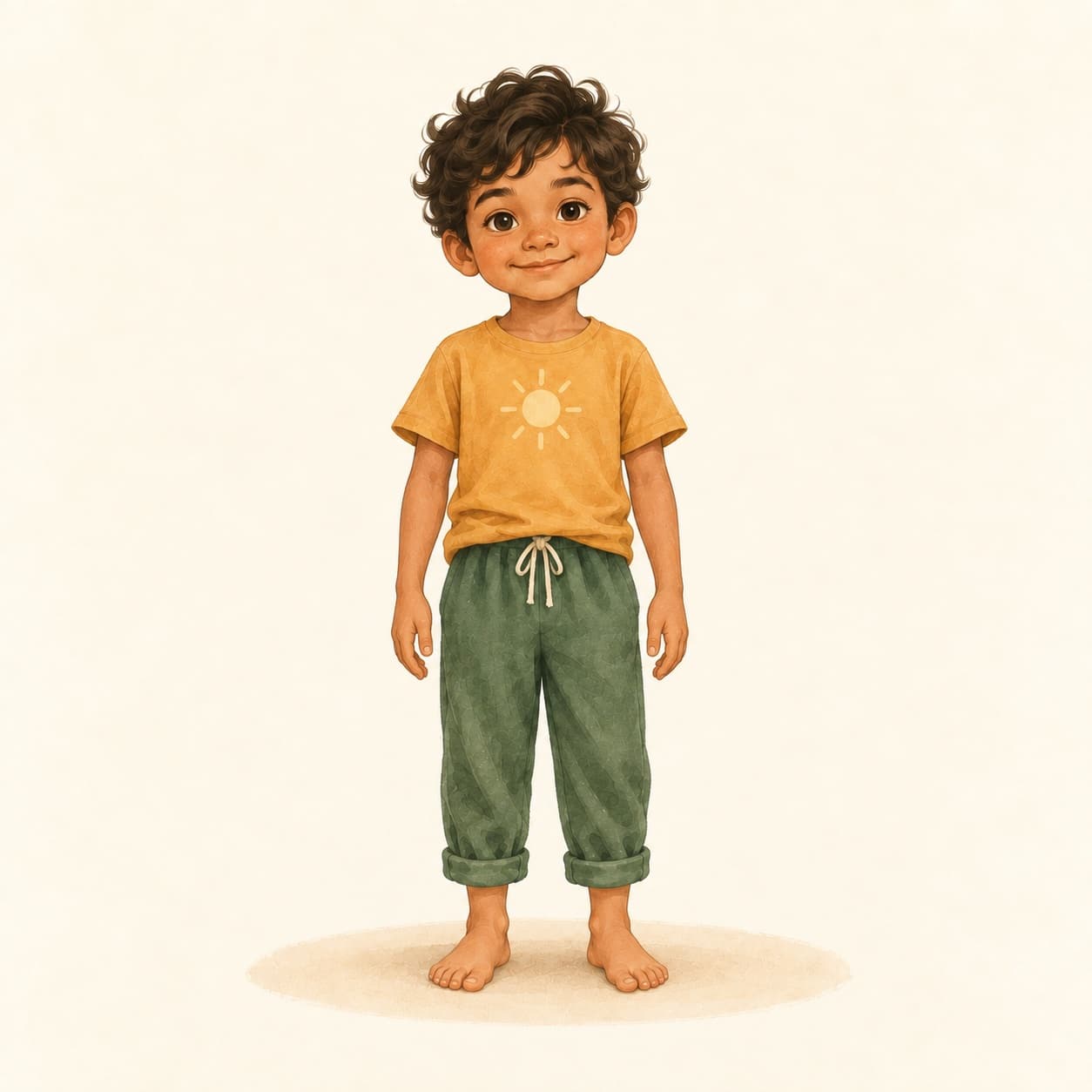
1Stand tall with your feet comfortably apart. Relax your shoulders and look ahead.
What you practise: Notice how steadily your feet meet the floor.
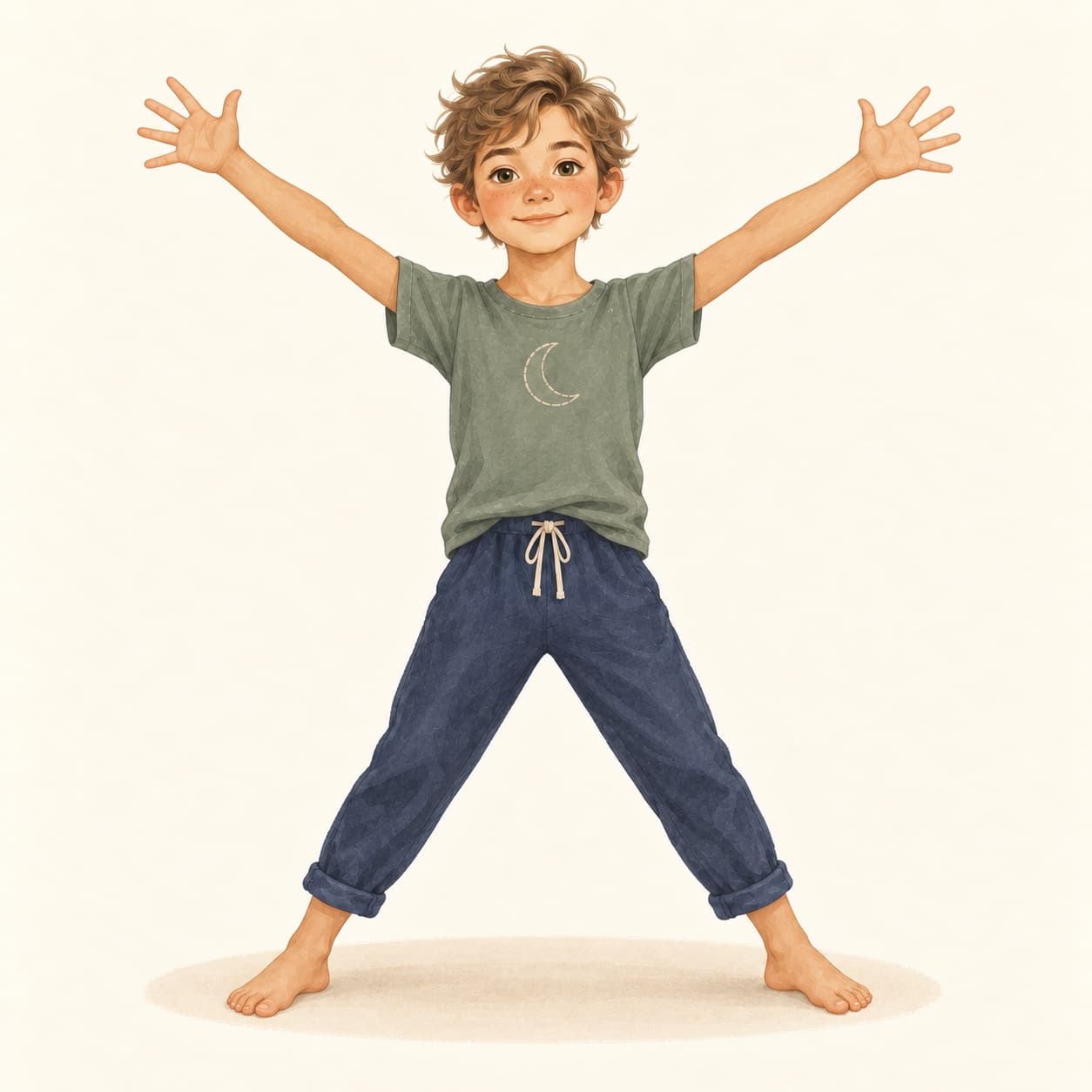
2Stand with your feet apart and stretch your arms wide like a star.
What you practise: Take up space and feel steady.
Gentle option: Keep your knees soft and leave room around you.
 3
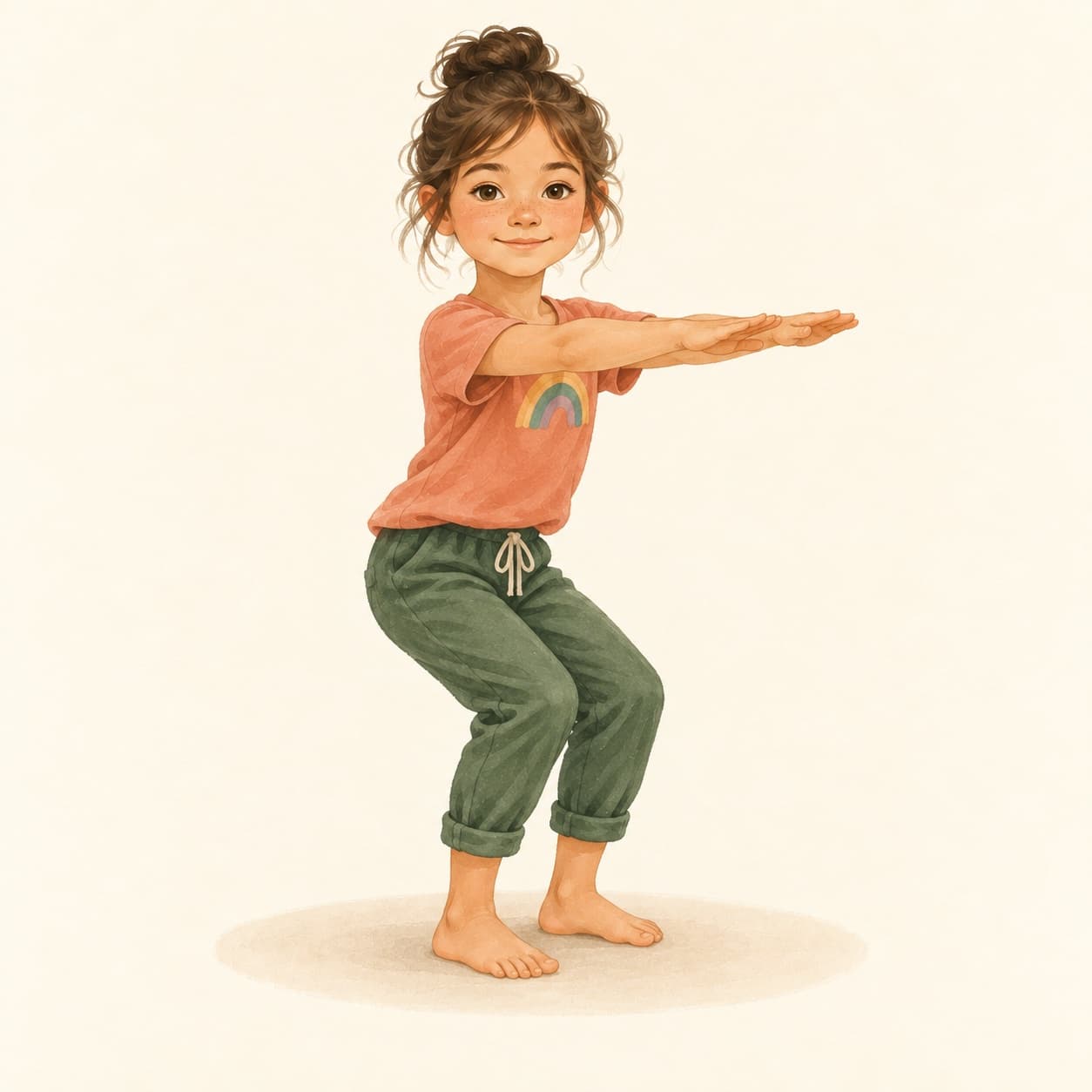
3Bend your knees a little, as if sitting on an imaginary chair.
What you practise: Notice your legs working while you breathe comfortably.
Gentle option: A small bend is enough; rise gently again.
 4
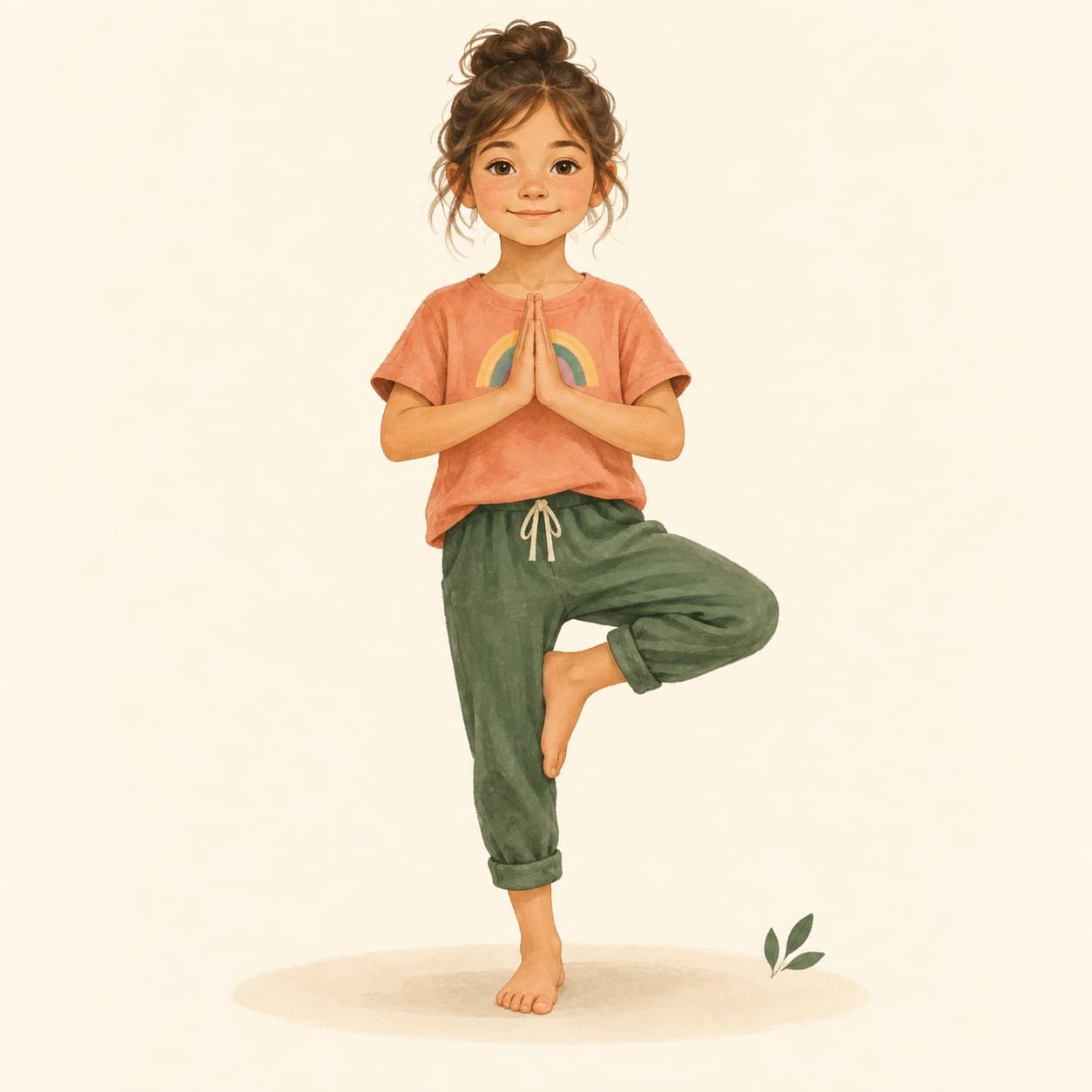
4Balance on one leg. Keep the other toes on the floor, or rest that foot against your ankle or calf.
What you practise: Look at one point and calmly try again if you wobble.
Gentle option: Never press your foot against your knee. A wall or chair can help.
 5
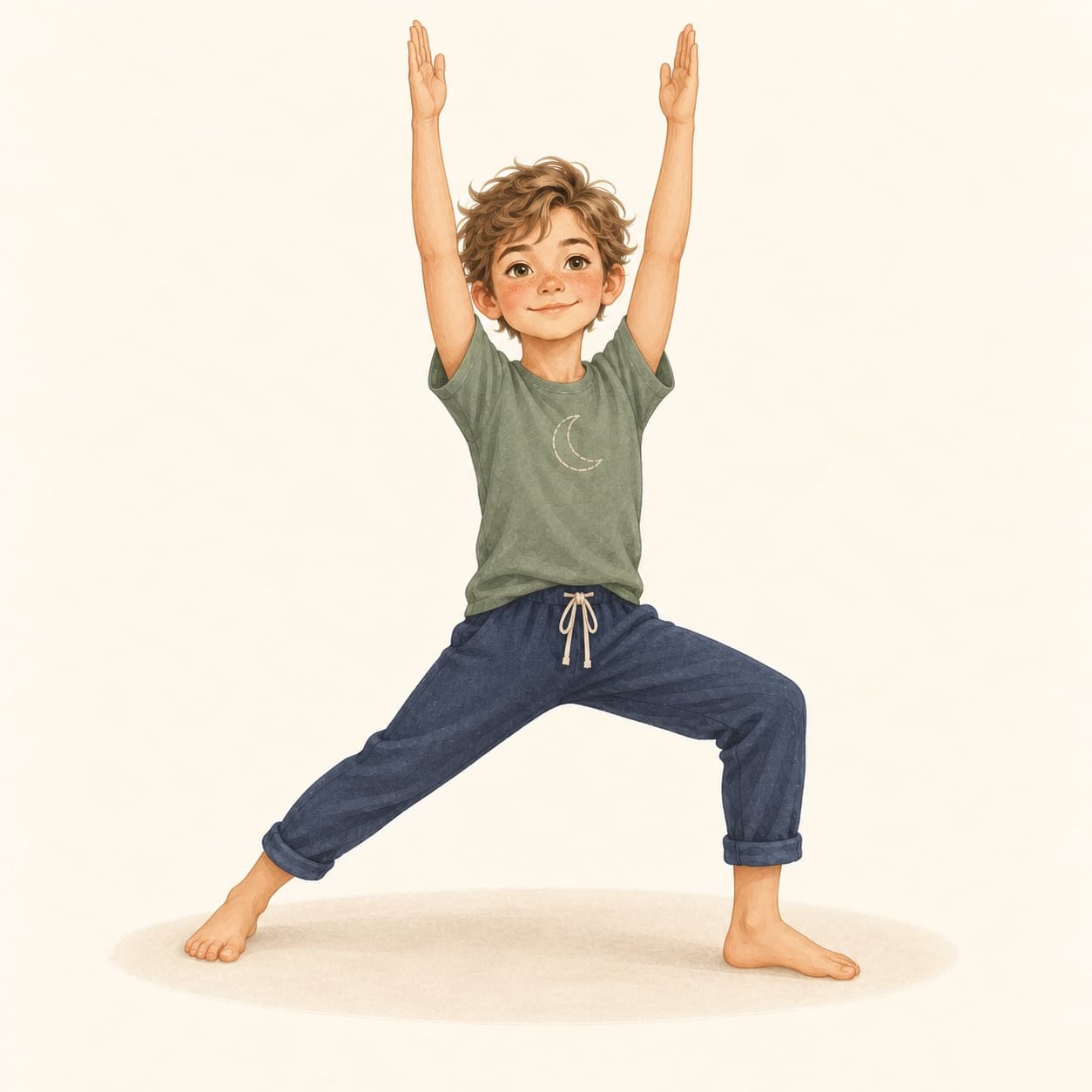
5Step one foot forward and one back. Bend your front knee comfortably and reach your arms upward.
What you practise: Feel strength in your legs and length through your body.
Gentle option: Keep the step comfortable, then change sides.
 6
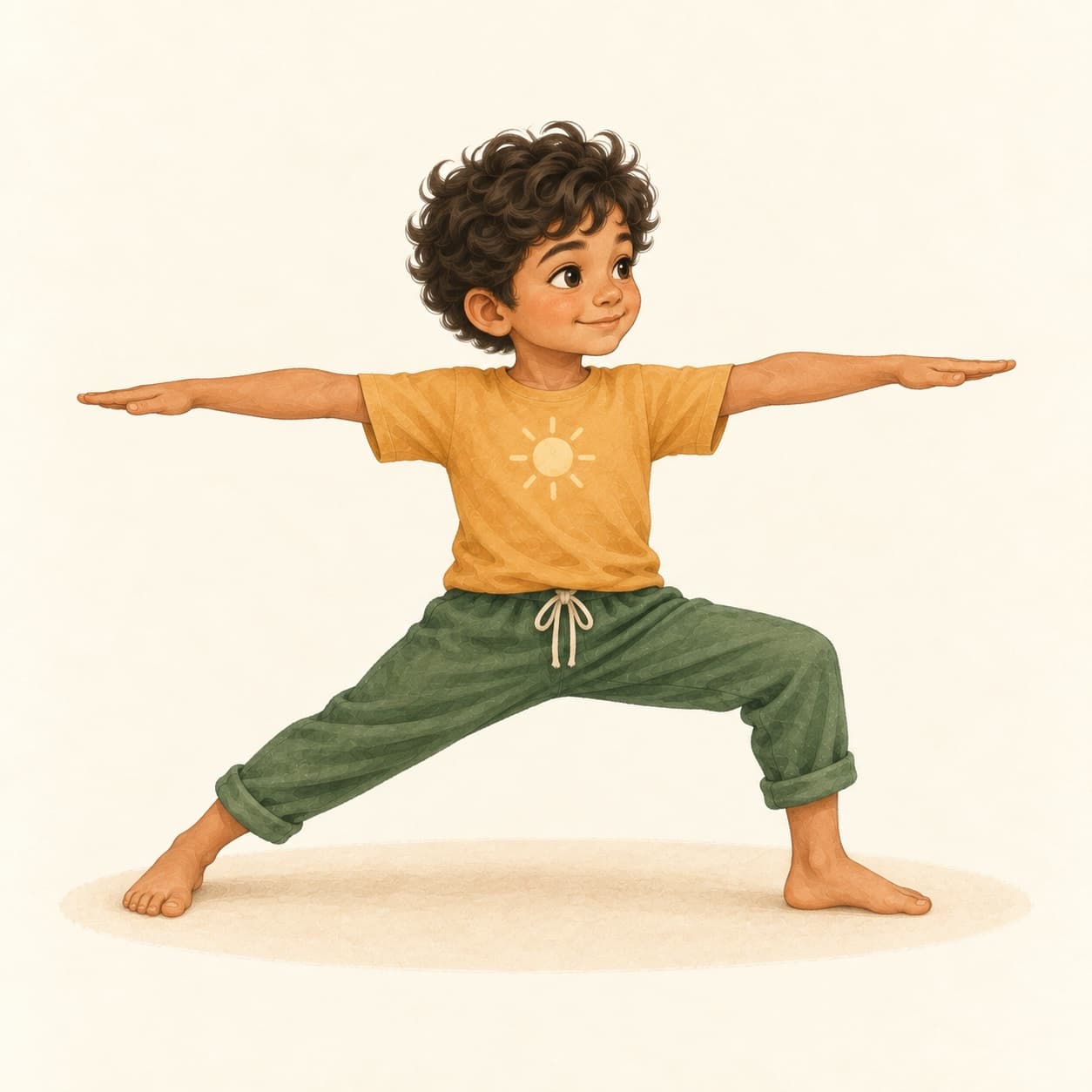
6Stand wide, bend your front knee and reach your arms in opposite directions.
What you practise: Practise standing steadily and directing your attention.
Gentle option: Keep the bend small and change sides after a few breaths.
 7
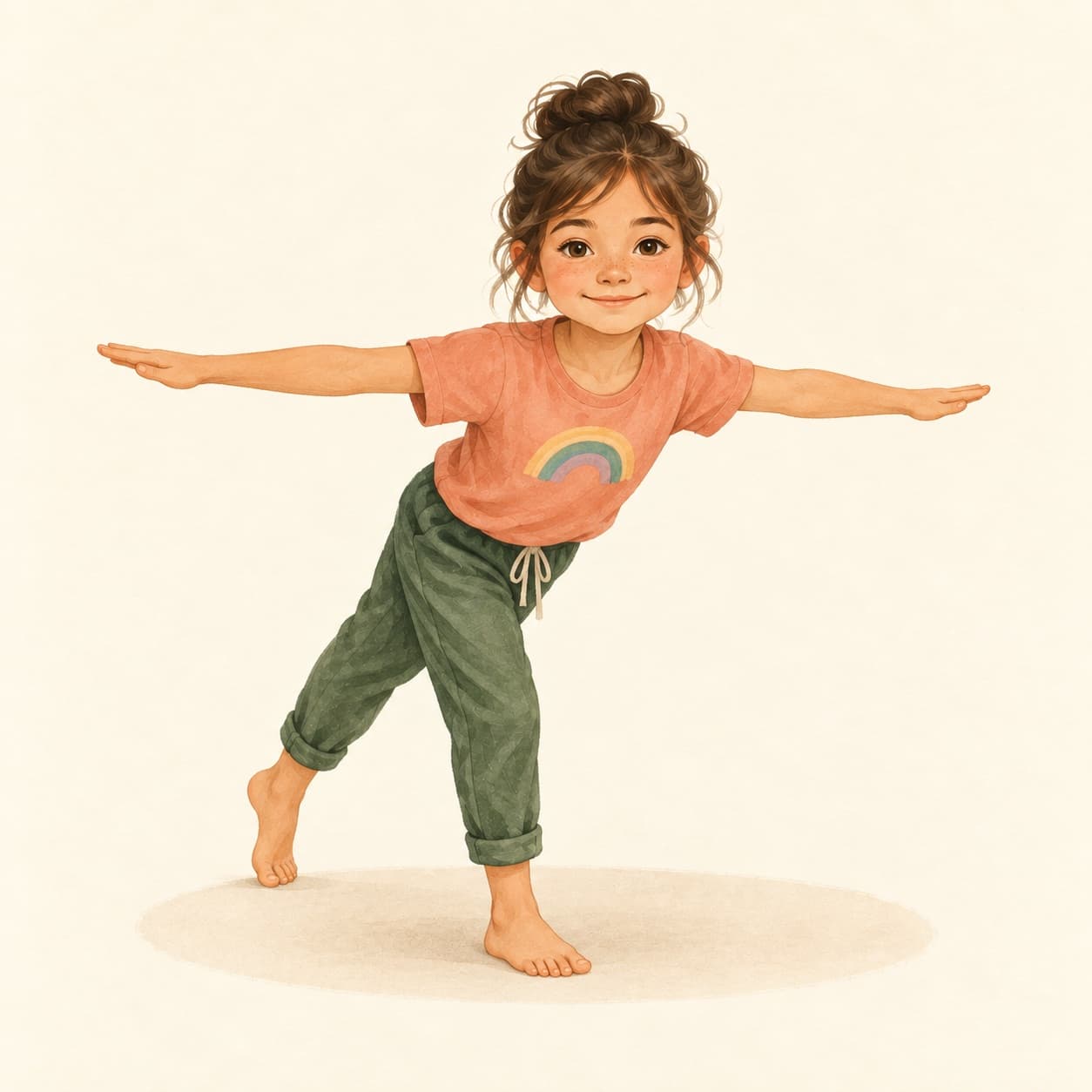
7Tip forward a little and stretch your arms like wings. Keep the back toes on the floor.
What you practise: Explore balance without needing to prove anything.
Gentle option: Hold a chair if that feels better.
 8
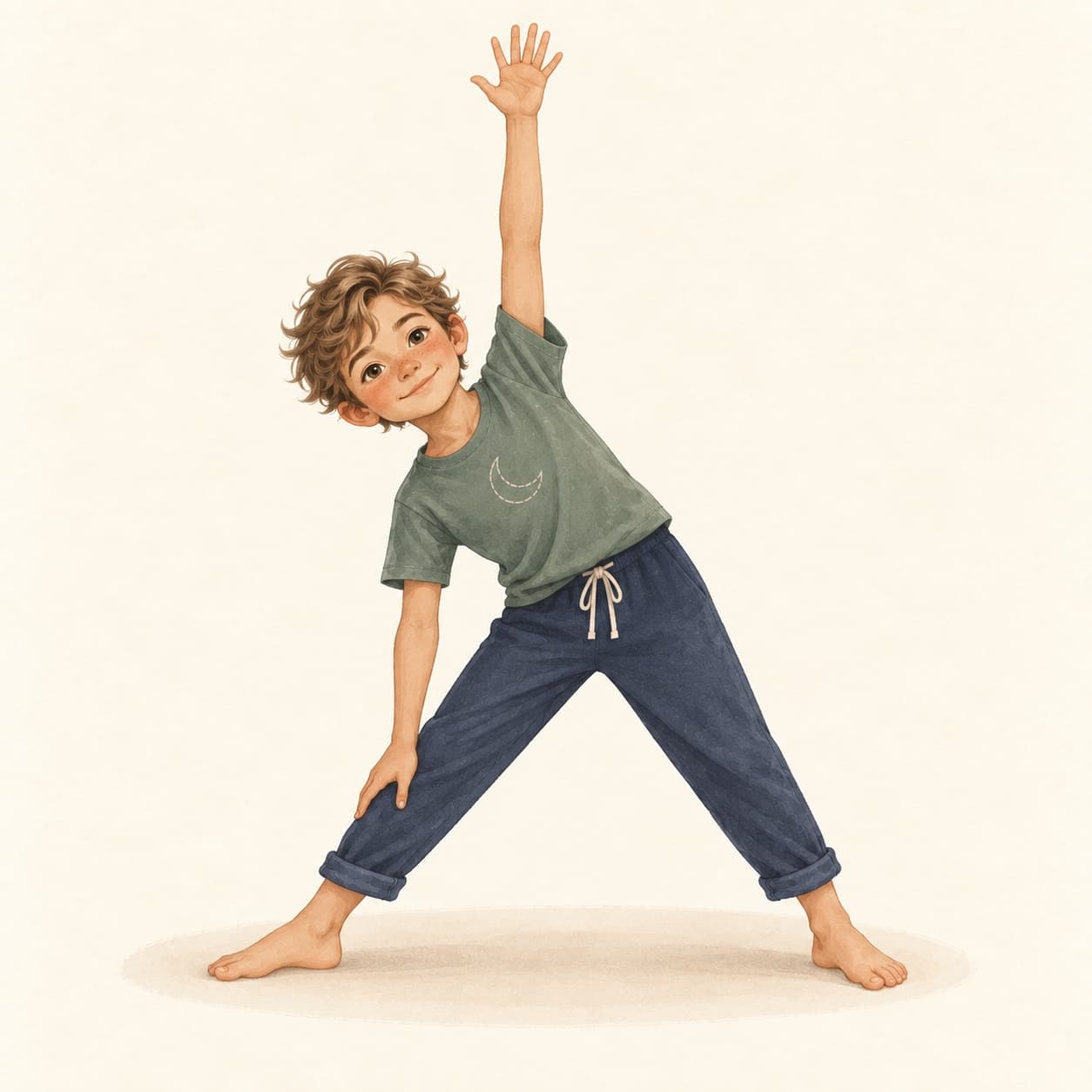
8Stand wide, turn one foot out and reach sideways. Rest your lower hand on your shin.
What you practise: Notice how both sides of your body feel.
Gentle option: Only reach as far as comfortable; a block can offer support.
 9
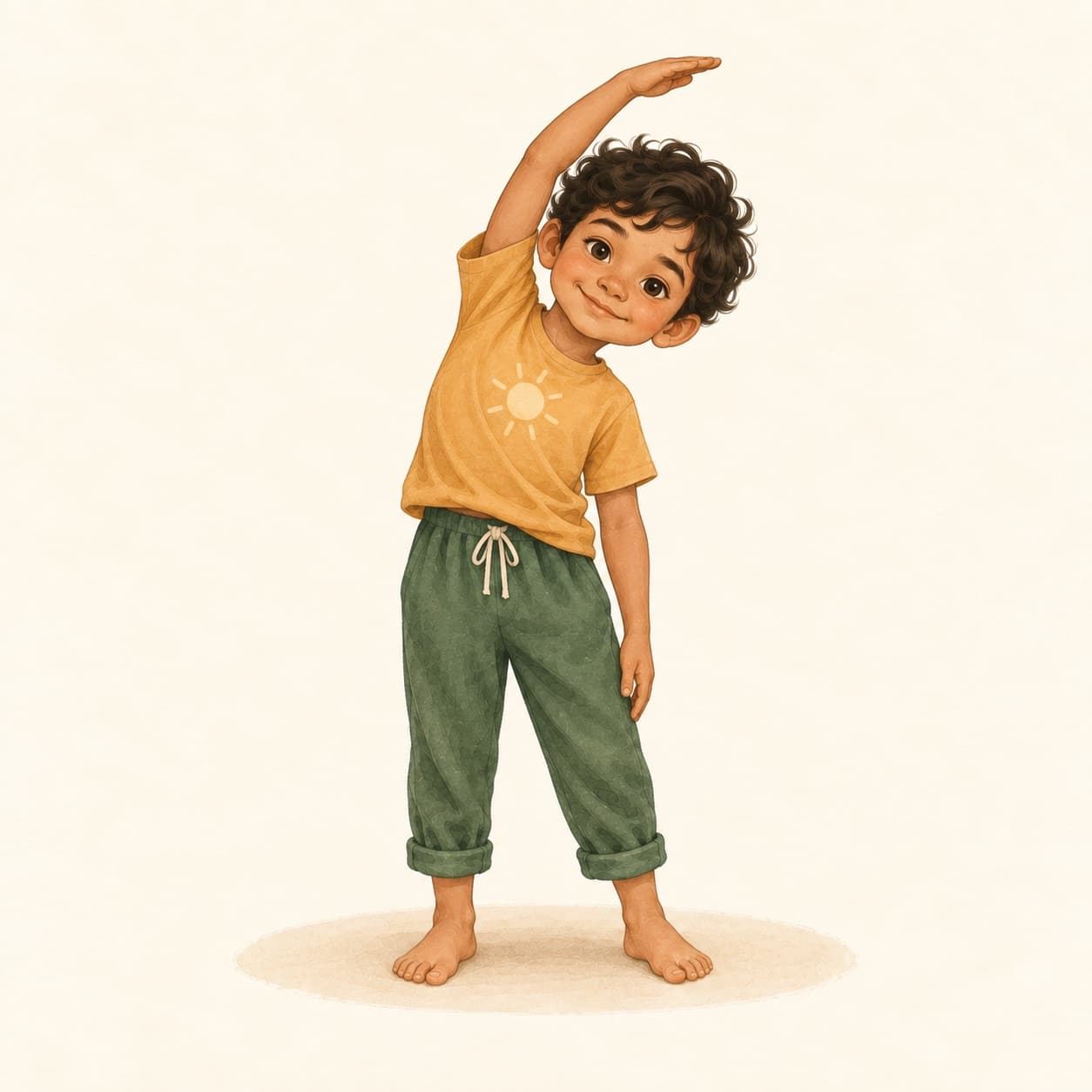
9Reach one arm overhead and make a small curve to the side.
What you practise: Notice the space along your side as you breathe.
Gentle option: Keep both feet grounded and try the other side too.
 10
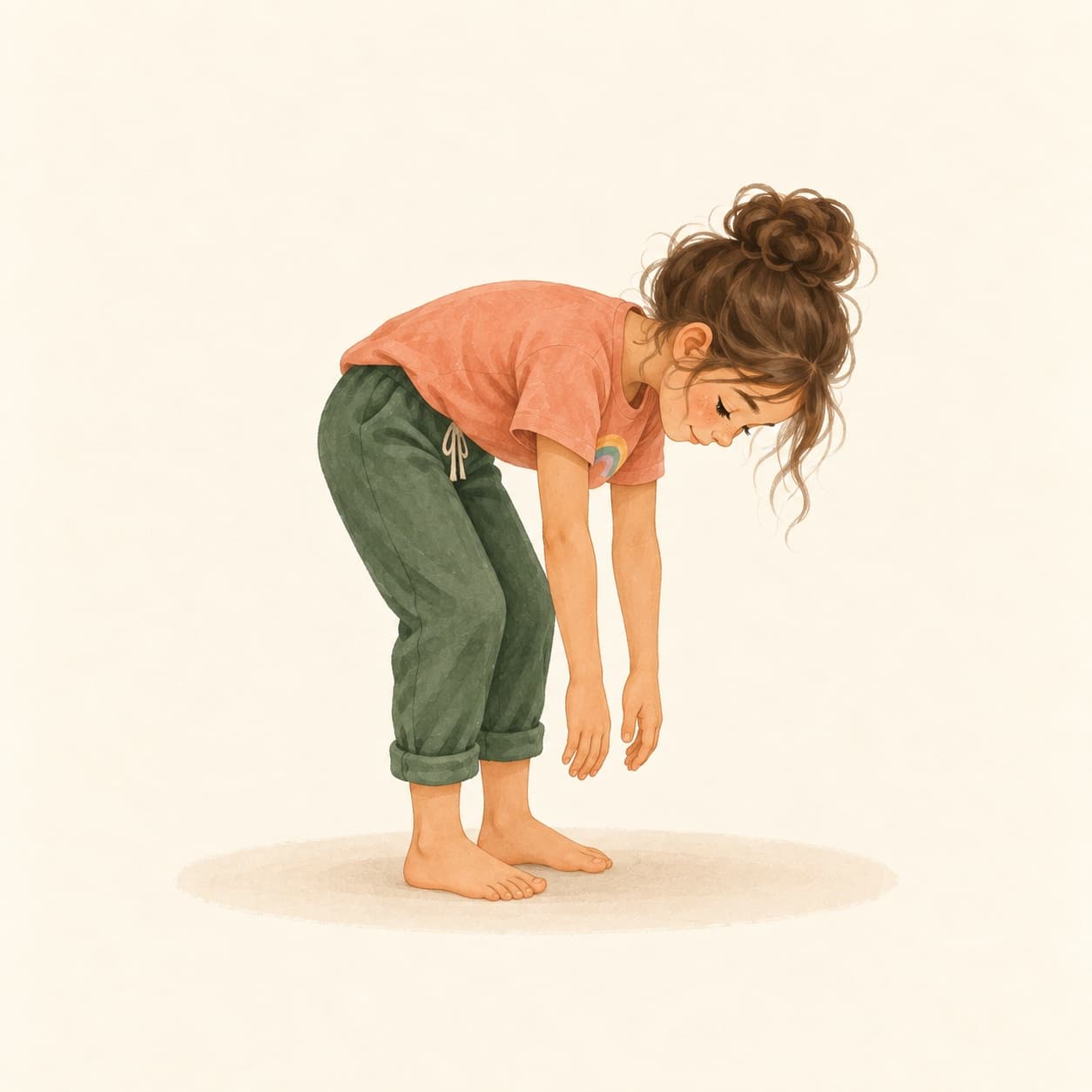
10Bend your knees and fold forward comfortably. Let your head and arms hang softly.
What you practise: Soften your body without needing to touch your toes.
Gentle option: Rise slowly; stop if you feel dizzy.
Explore the poses
Playful movements close to the ground.
 11
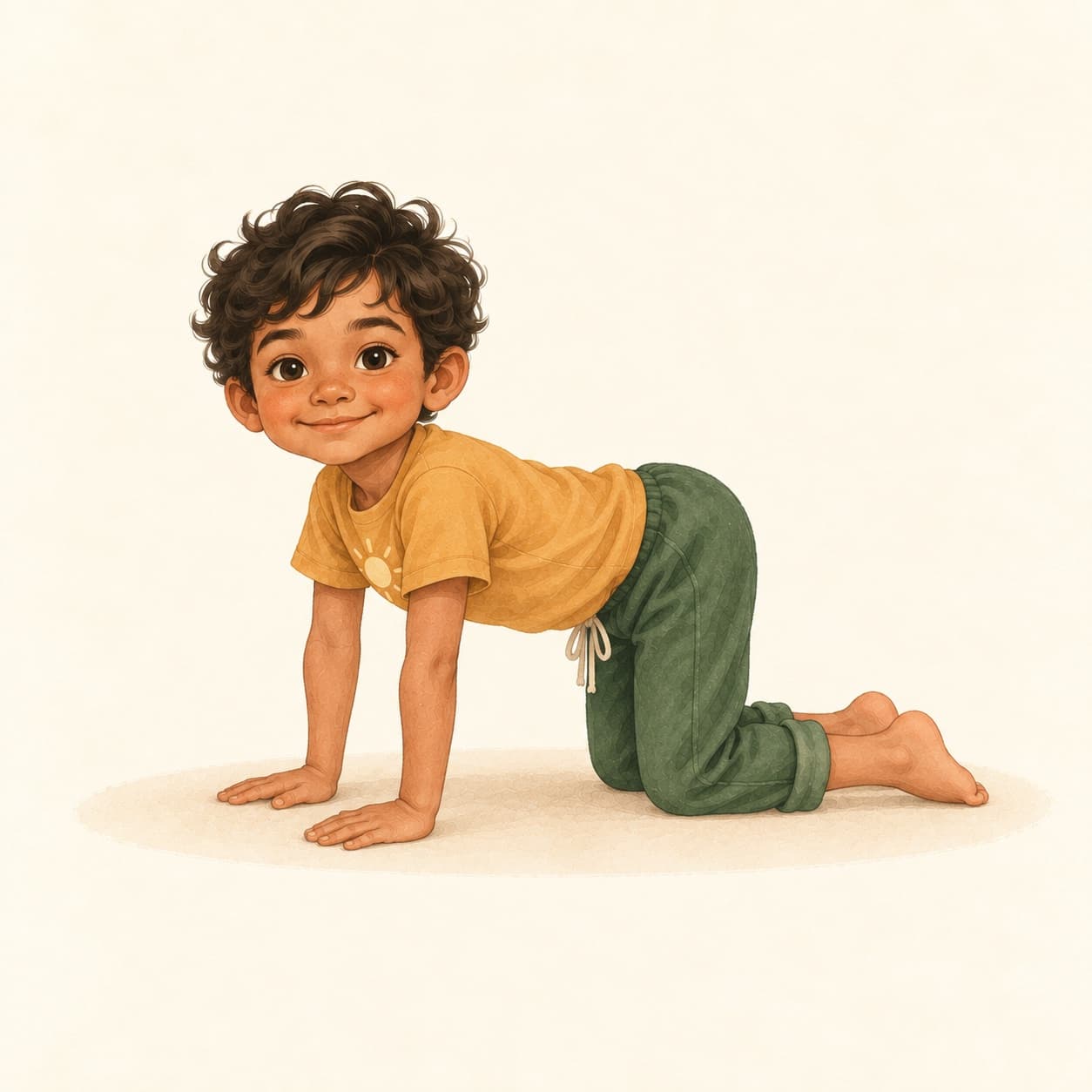
11Place your hands beneath your shoulders and knees beneath your hips. Make a steady table.
What you practise: Notice how your hands and knees support you.
Gentle option: Put something soft under your knees if you like.
 12
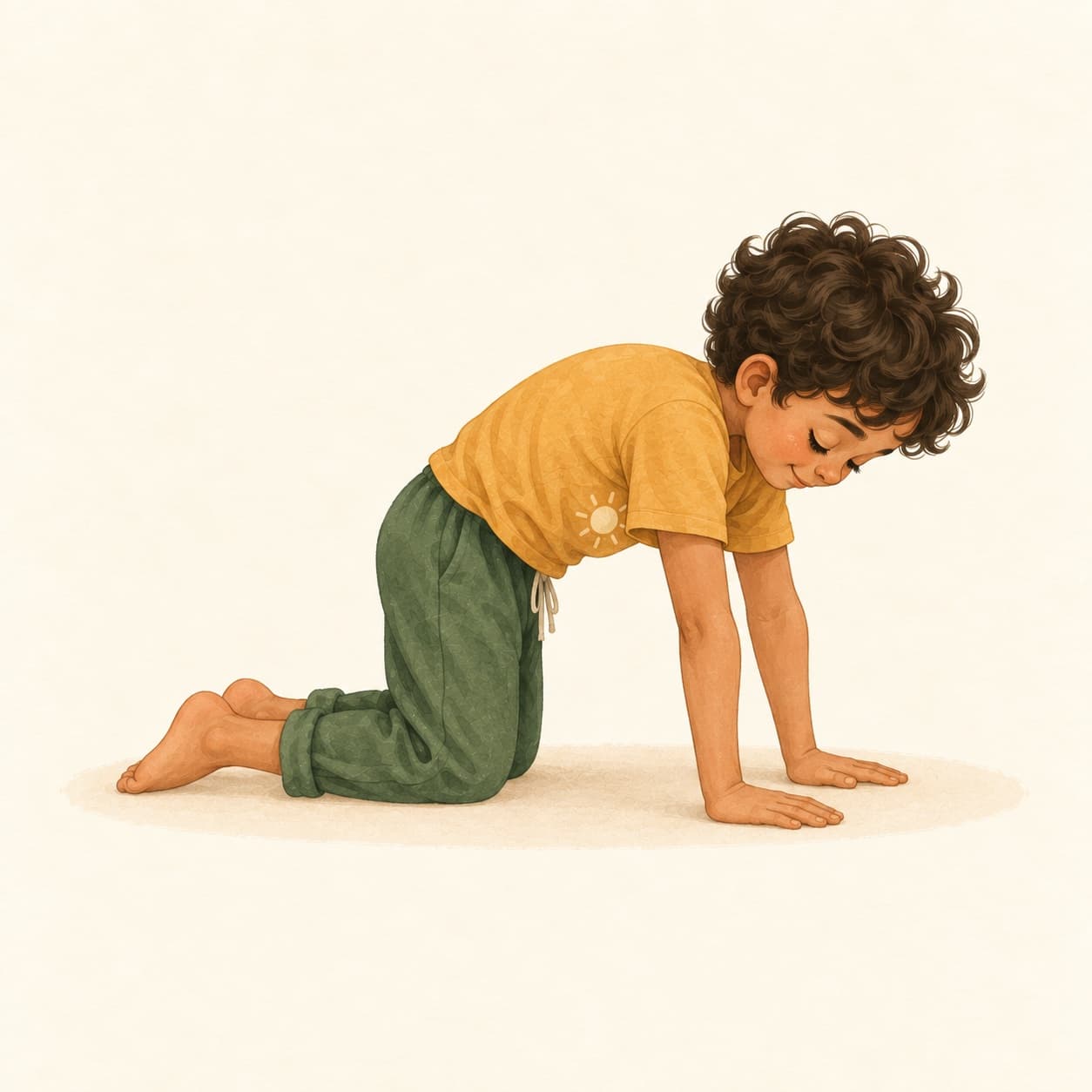
12From Tabletop, gently round your back and look down.
What you practise: Notice how your back moves as you breathe out.
Gentle option: Keep the movement small; do not push into your wrists or back.
 13
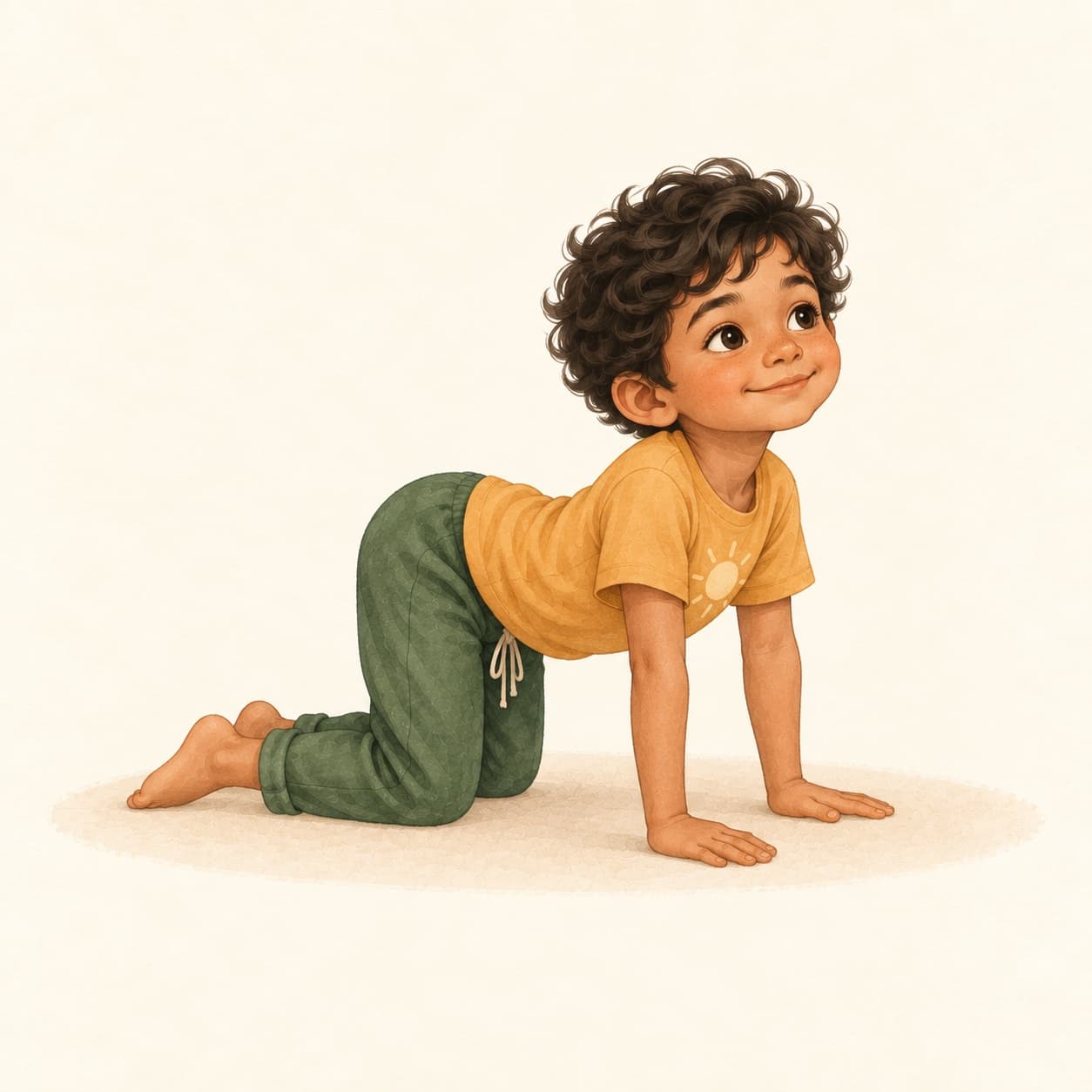
13From Tabletop, open your chest a little and let your back curve gently.
What you practise: Notice the difference between rounding and opening.
Gentle option: Only look up a little so your neck stays comfortable.
 14
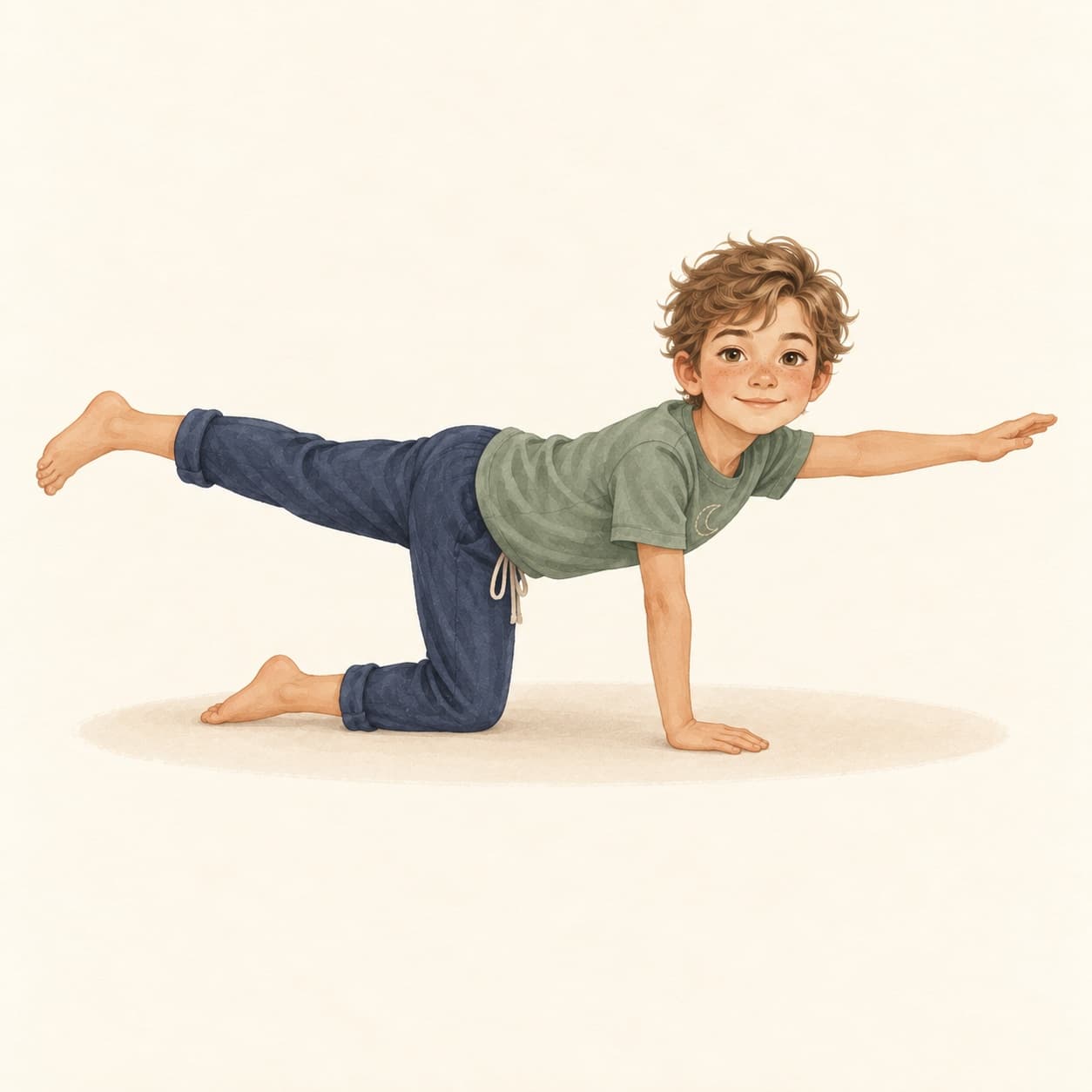
14From Tabletop, reach one arm forward and the opposite leg back.
What you practise: Find a calm balance while you keep breathing.
Gentle option: Start with just one arm or leg, then change sides.
 15
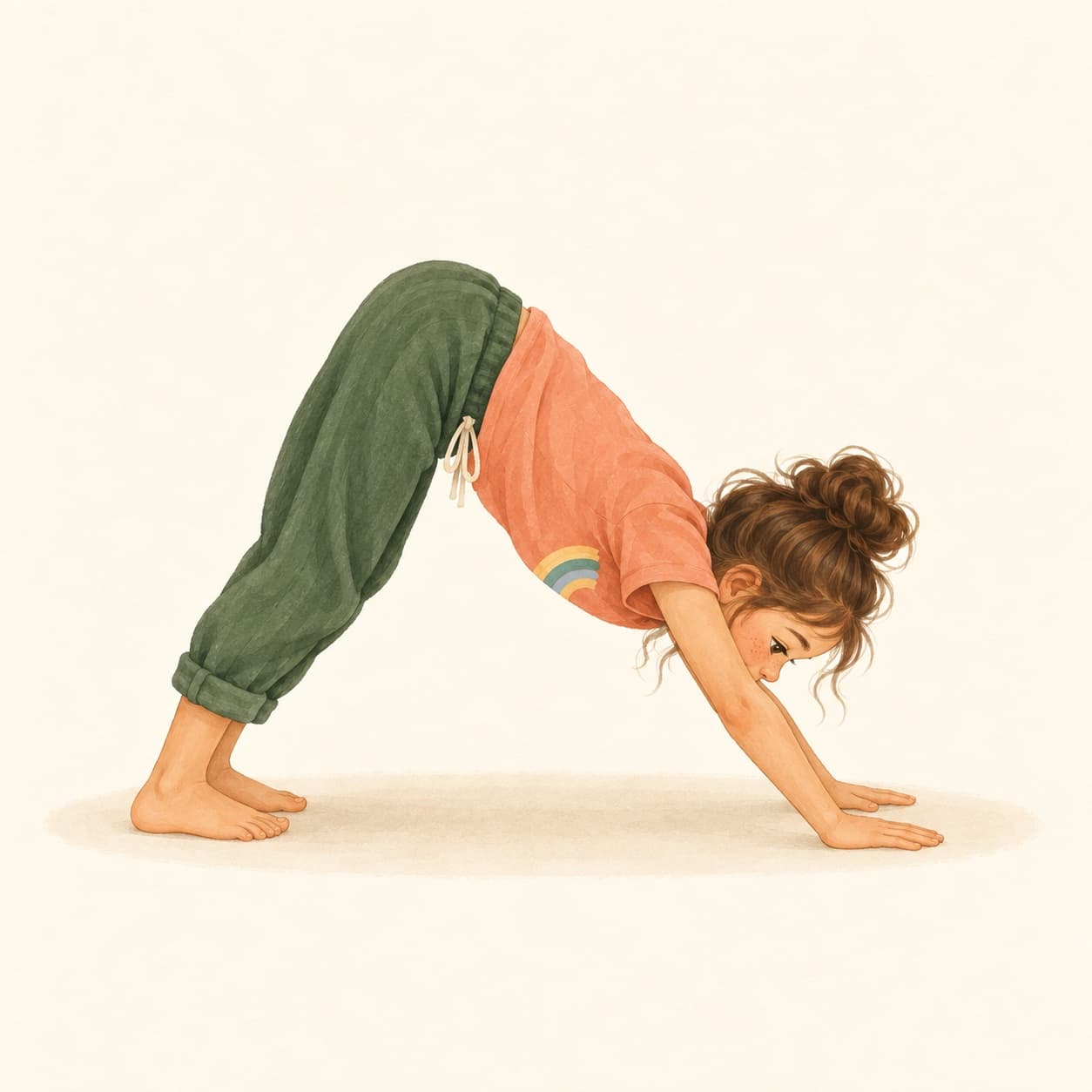
15From hands and knees, lift your hips into an upside-down V.
What you practise: Notice length in your back and support through your hands.
Gentle option: Your knees may stay bent; your heels do not need to touch the floor.
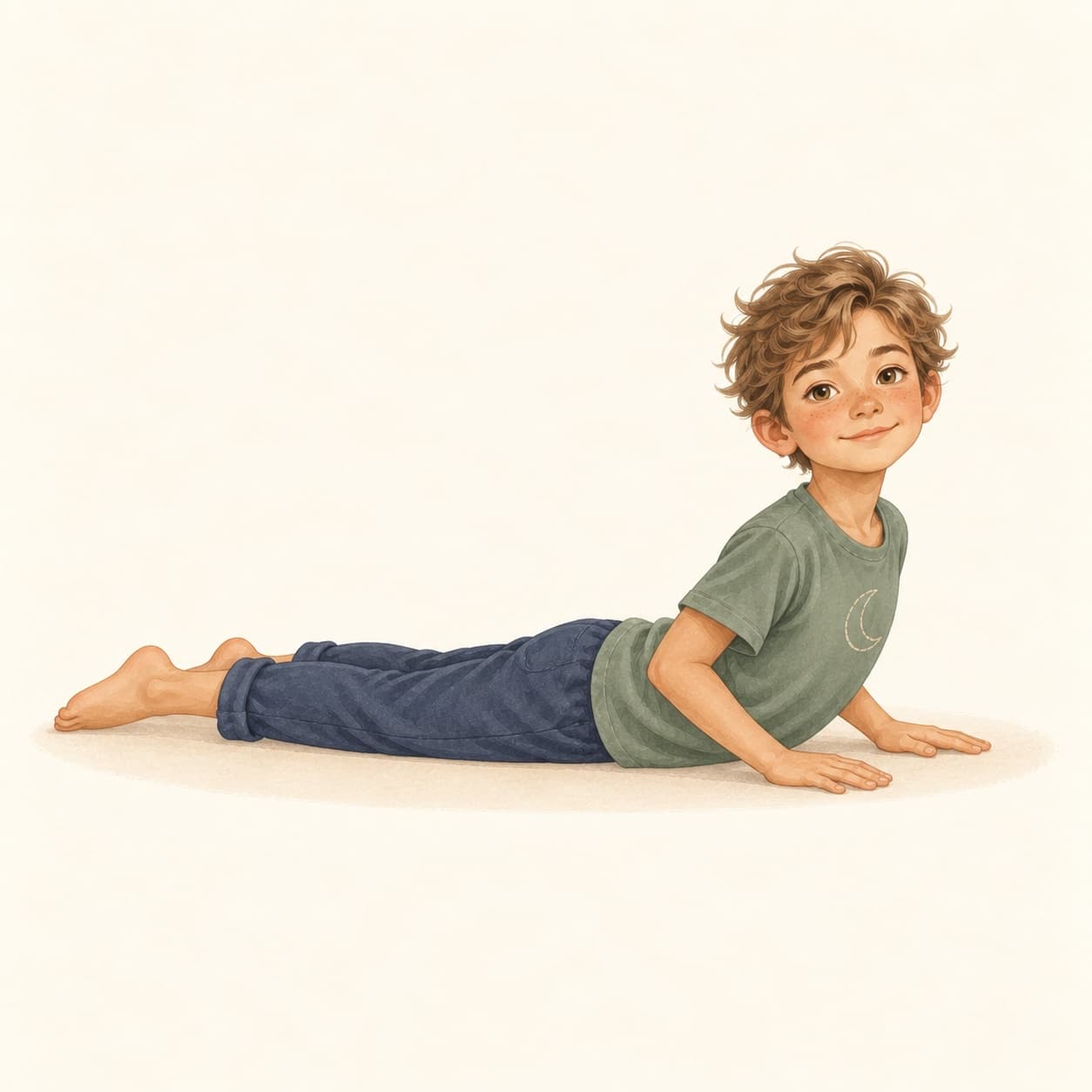 16
16Lie on your tummy and lift your chest just a little, keeping your elbows bent.
What you practise: Notice your chest opening without forcing it.
Gentle option: Soften your shoulders and stop if your back hurts.
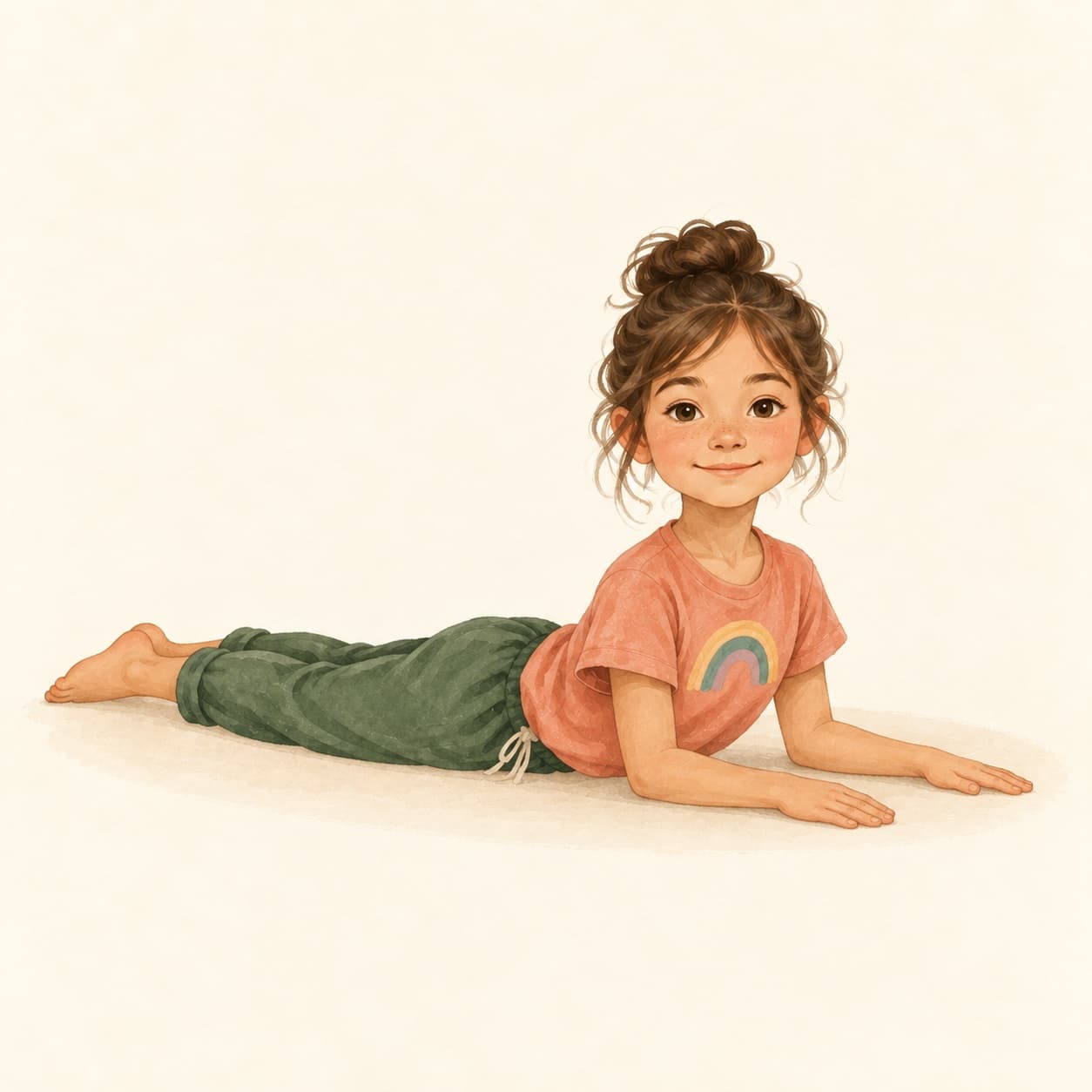 17
17Lie on your tummy and rest on your forearms. Lift your chest gently.
What you practise: Practise an open shape with relaxed shoulders.
Gentle option: Keep the lift small and your back comfortable.
Explore the poses
Sit comfortably and move at your own pace.
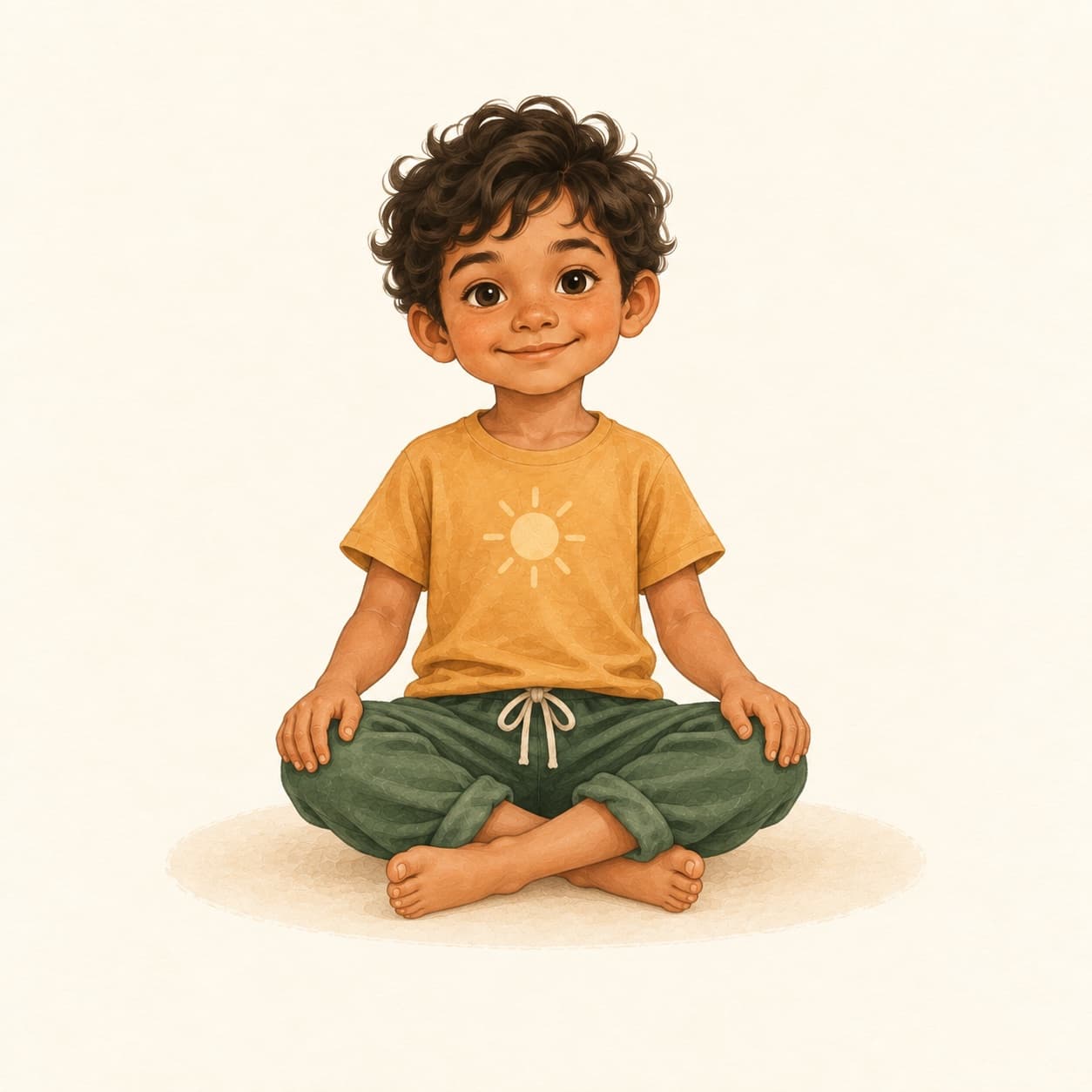 18
18Sit comfortably with crossed legs and lengthen your back.
What you practise: Find a shape in which sitting feels easy.
Gentle option: Use a cushion or sit on a chair if that feels better.
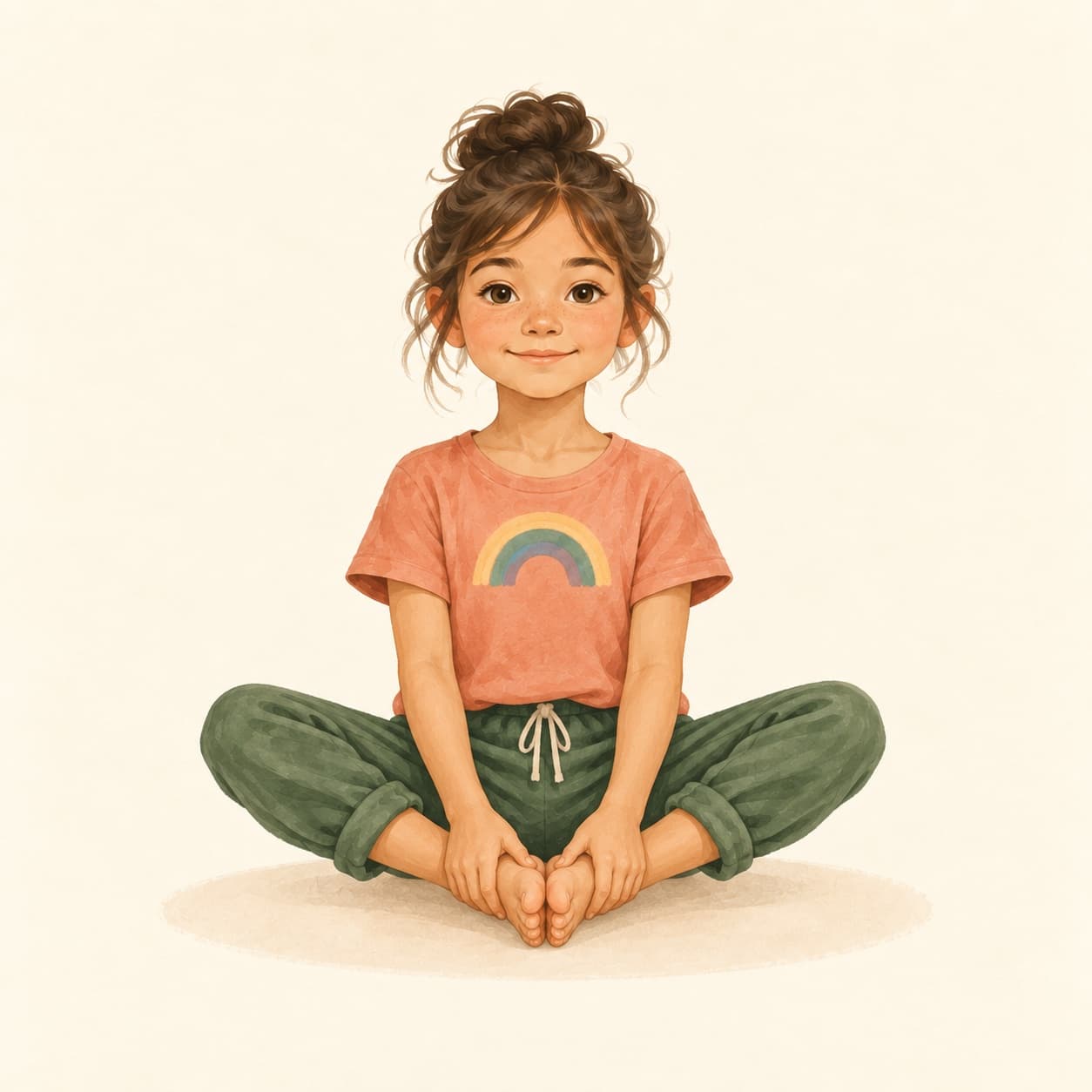
19Bring the soles of your feet together and let your knees open comfortably.
What you practise: Notice how stillness and gentle movement can go together.
Gentle option: Do not press your knees down; cushions can support them.
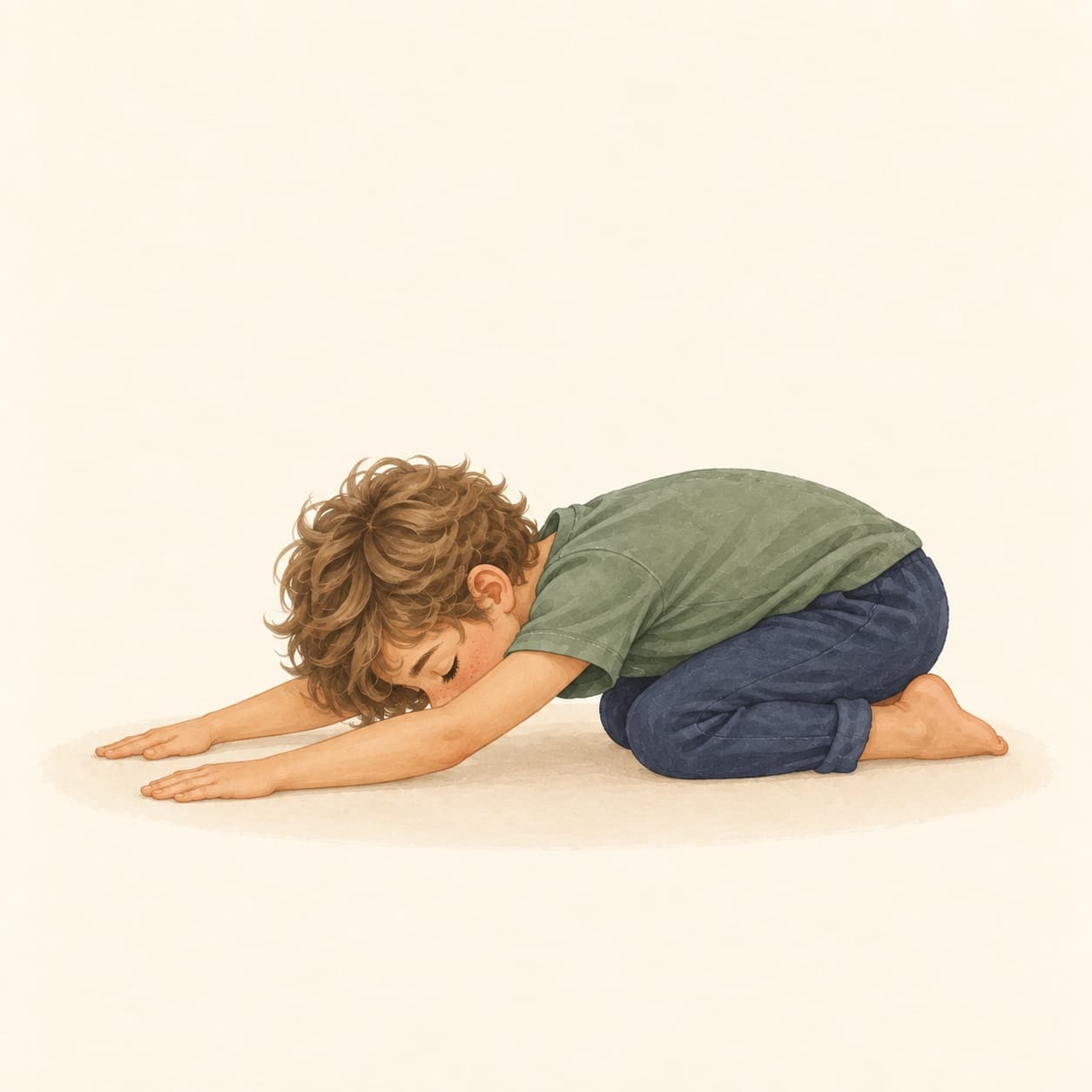 20
20Kneel and fold forward. Rest your body or forehead on a cushion if you like.
What you practise: Take a gentle pause without needing to do anything.
Gentle option: Choose another resting shape if your knees, hips or back hurt.
 21
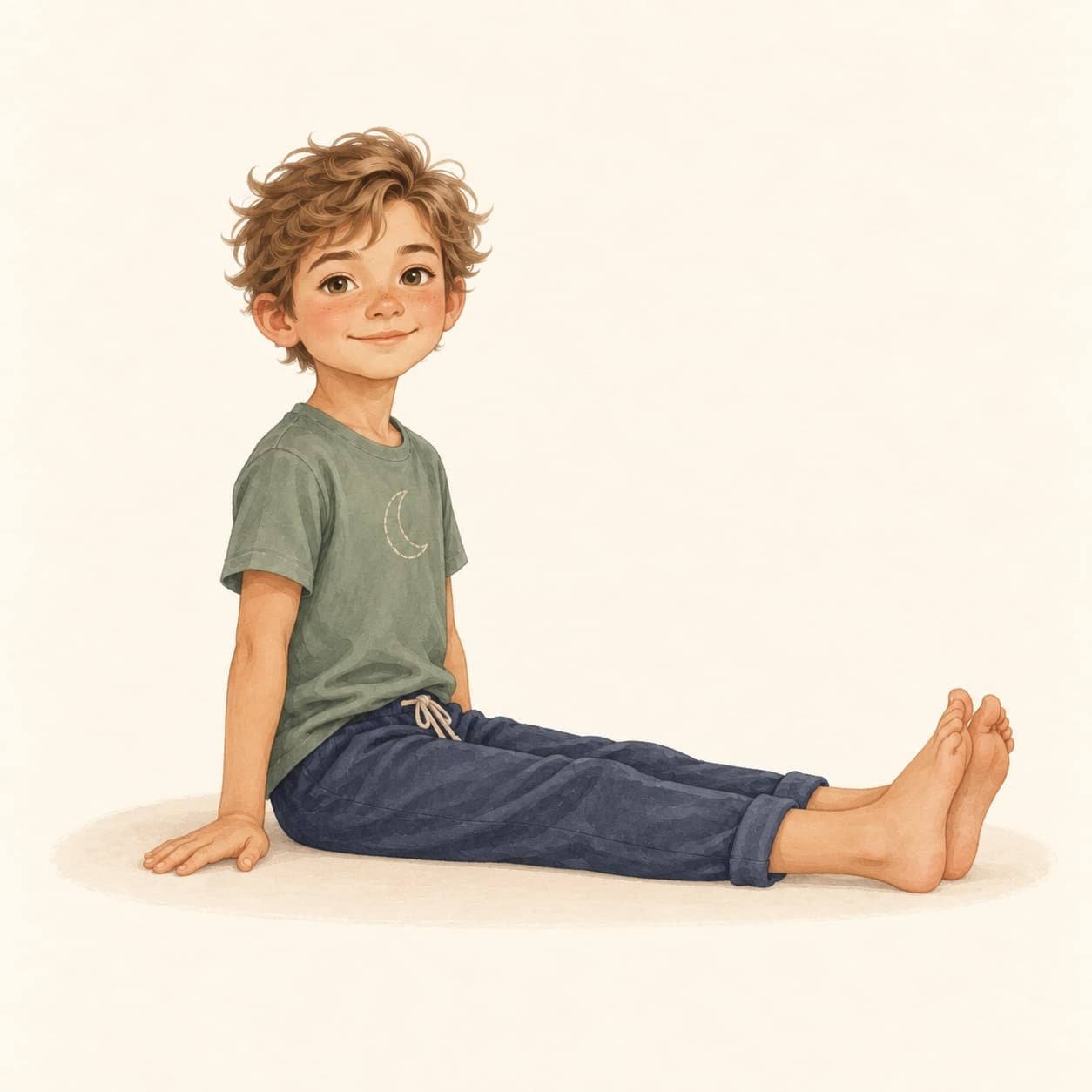
21Sit upright with your legs in front and rest your hands beside you.
What you practise: Notice the length of your back as you sit.
Gentle option: Soften your knees if that feels better.
 22
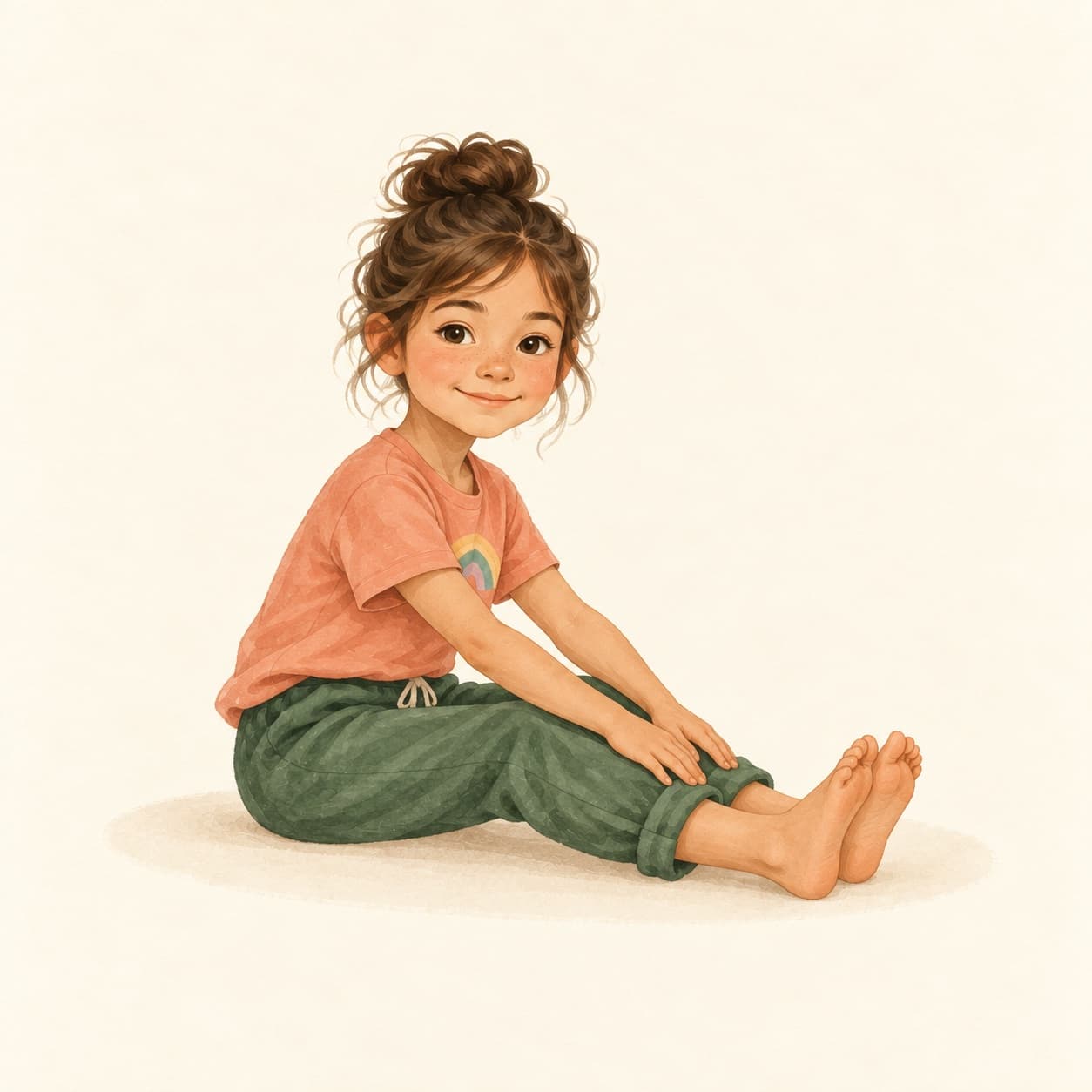
22Sit with your legs in front and fold forward only a little.
What you practise: Notice what feels comfortable in your back and legs.
Gentle option: Touching your toes is not the goal; bend your knees if you like.
 23
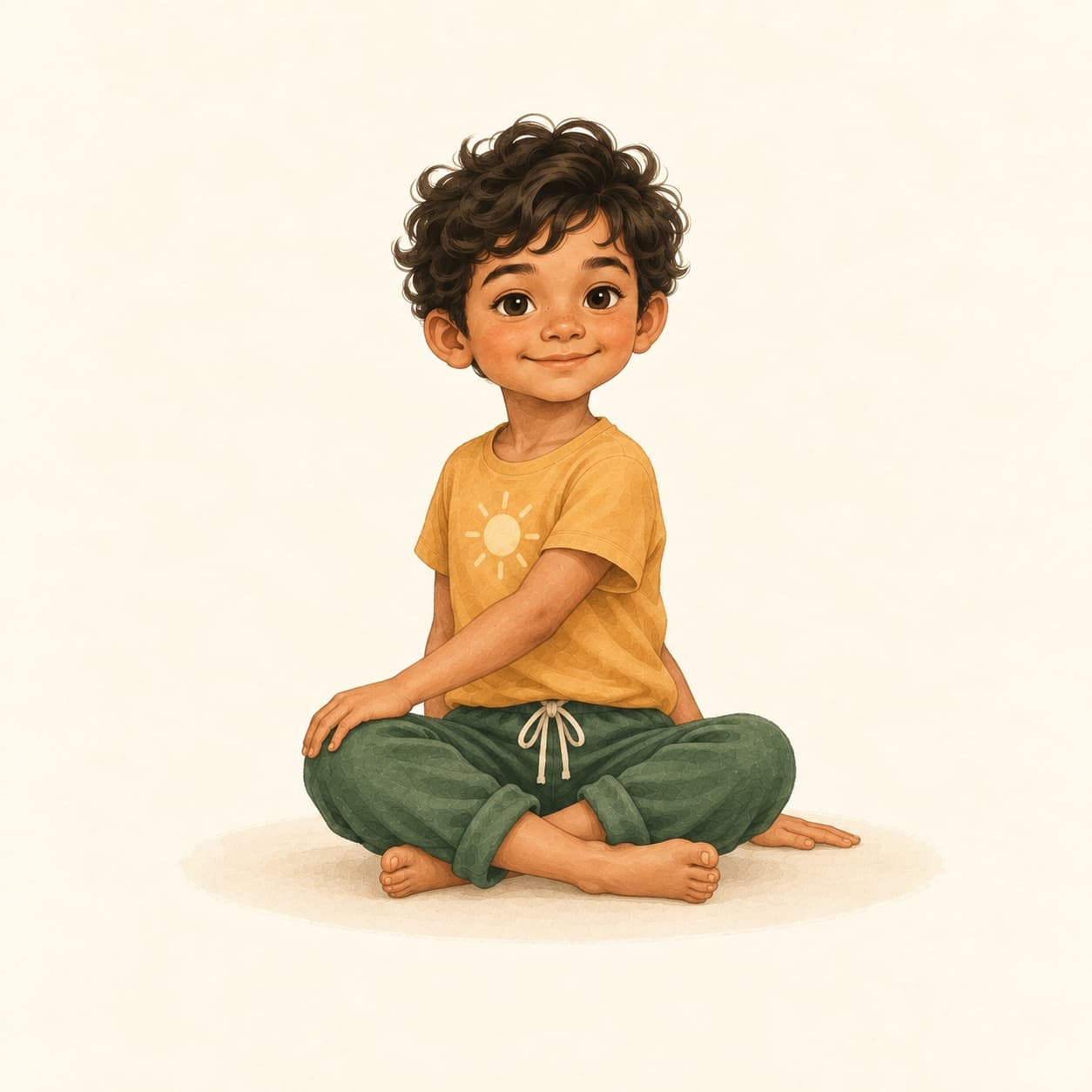
23Sit tall and turn your upper body gently a little to one side.
What you practise: Explore how each side of your body feels.
Gentle option: Do not pull yourself farther around; try the other side too.
 24
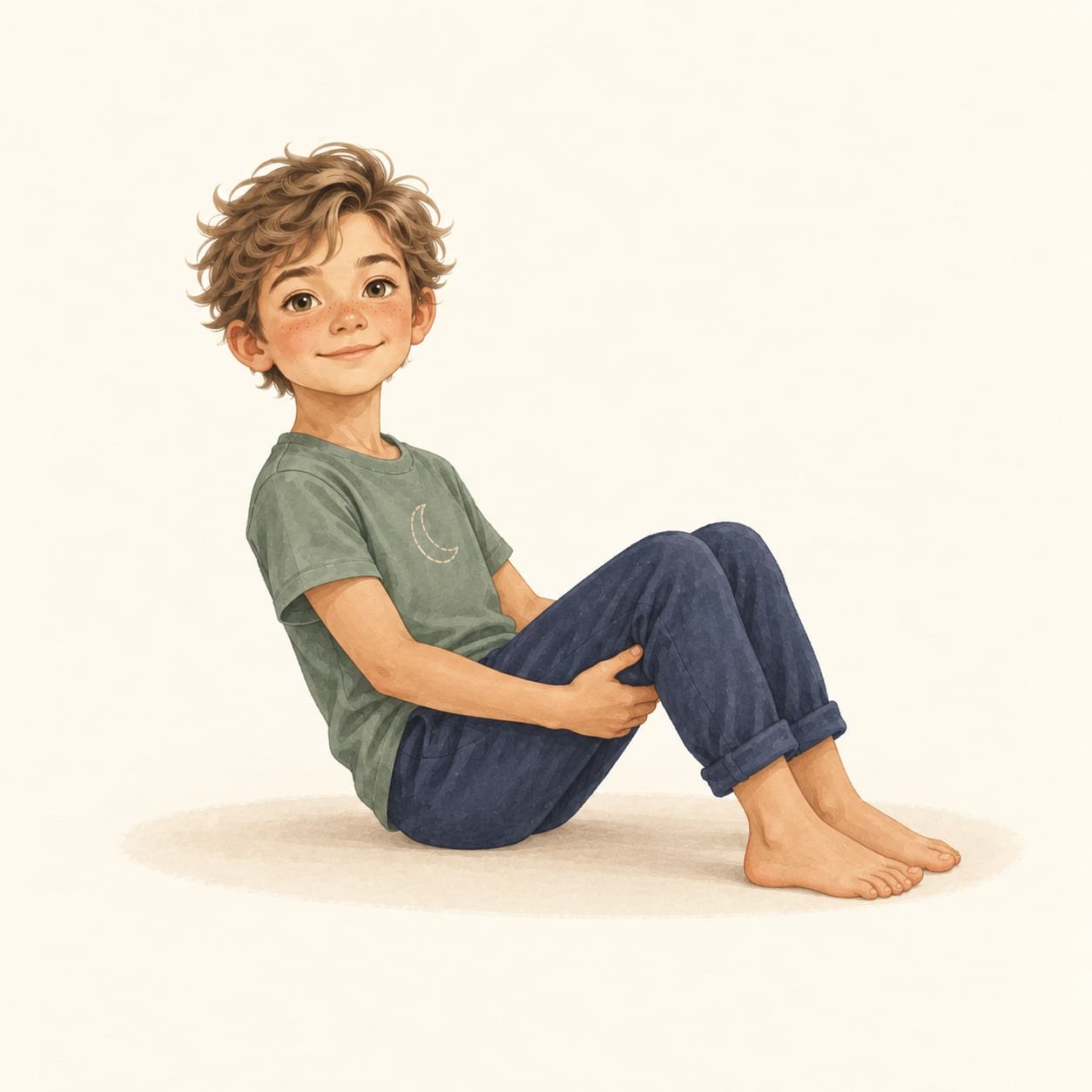
24Sit with bent knees, hold behind your thighs and lean back a little.
What you practise: Notice your middle working as you breathe calmly.
Gentle option: Your feet can stay on the floor.
Explore the poses
Gentle shapes for the final few minutes.
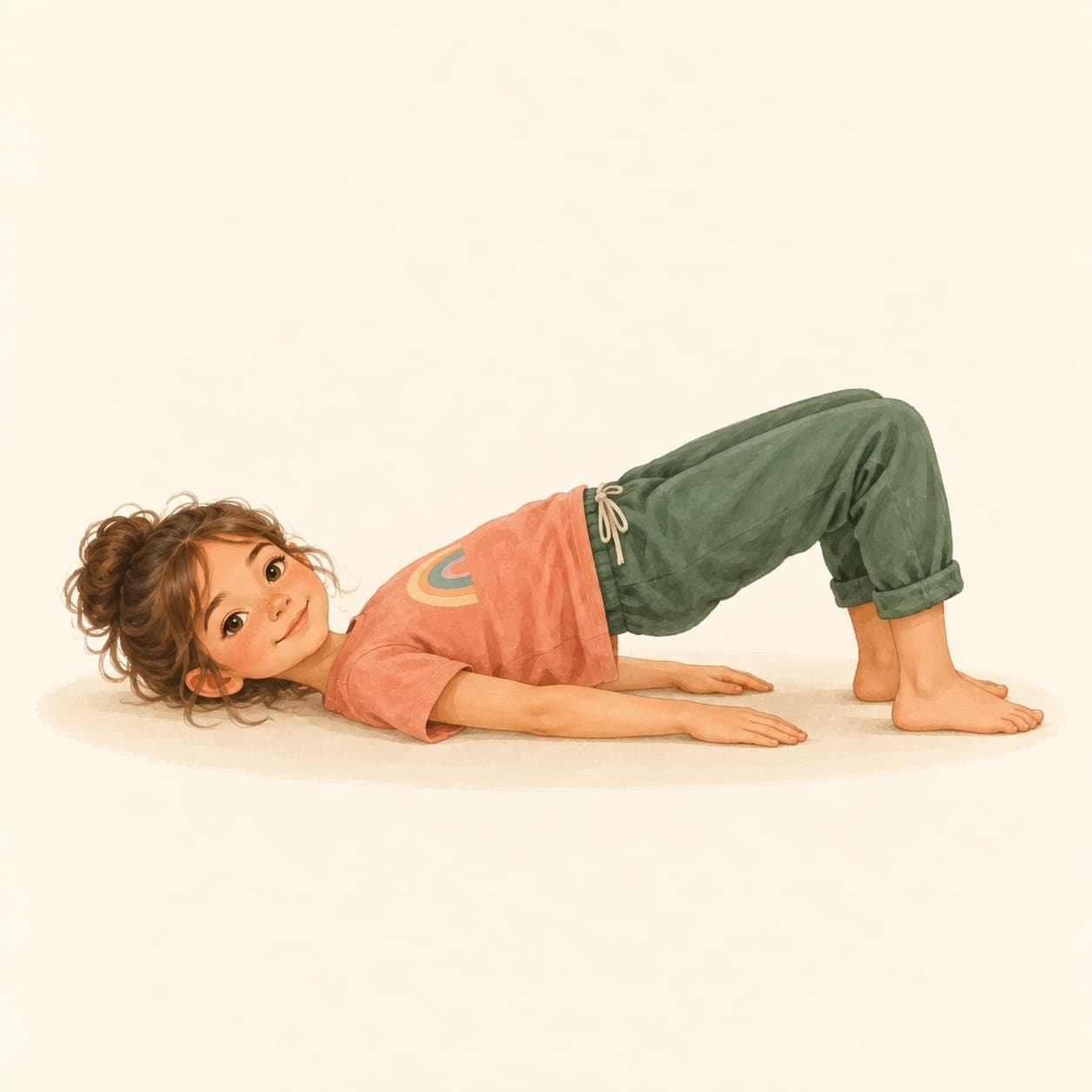 25
25Lie on your back with bent knees and feet on the floor. Lift your hips a little.
What you practise: Notice how your feet help support you.
Gentle option: Keep your neck relaxed and lower your hips slowly.
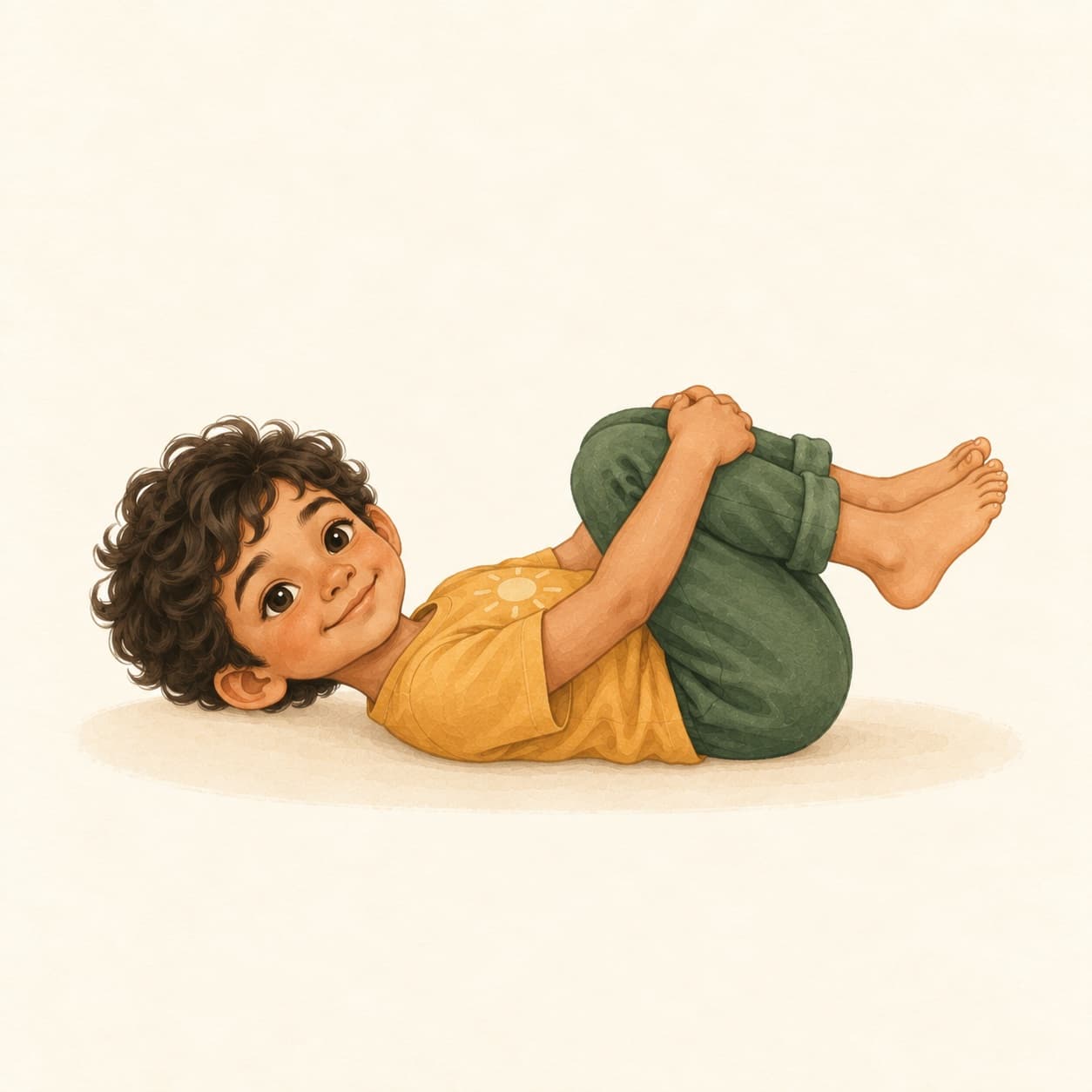 26
26Lie on your back and gently bring your knees towards your body.
What you practise: Notice how it feels to become small and still for a moment.
Gentle option: Do not pull hard; one knee at a time is fine too.
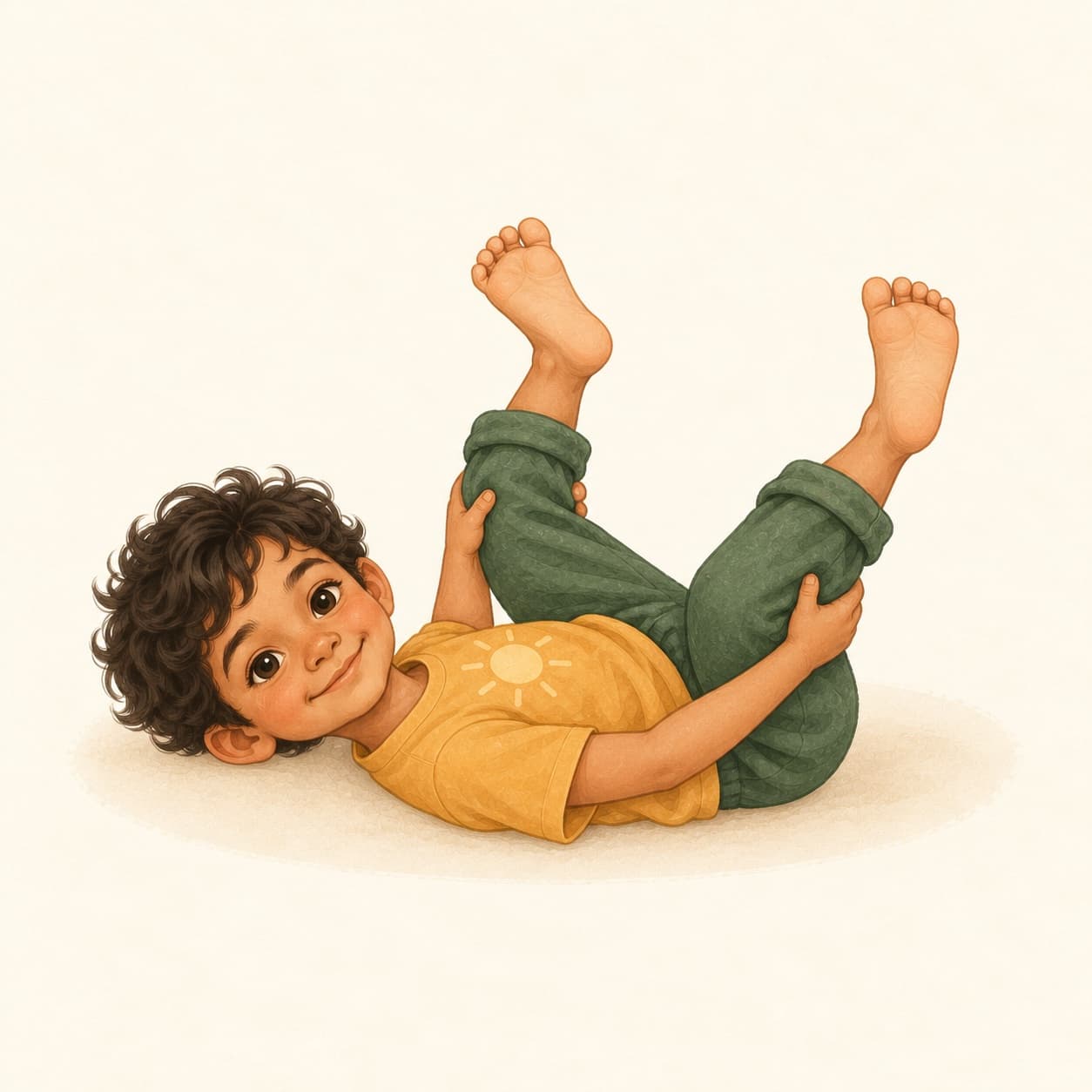 27
27Lie on your back with bent knees opening comfortably. Hold behind your thighs or hold your feet.
What you practise: Explore gentle movement without pulling.
Gentle option: Let your back rest on the floor and choose the easiest hold.
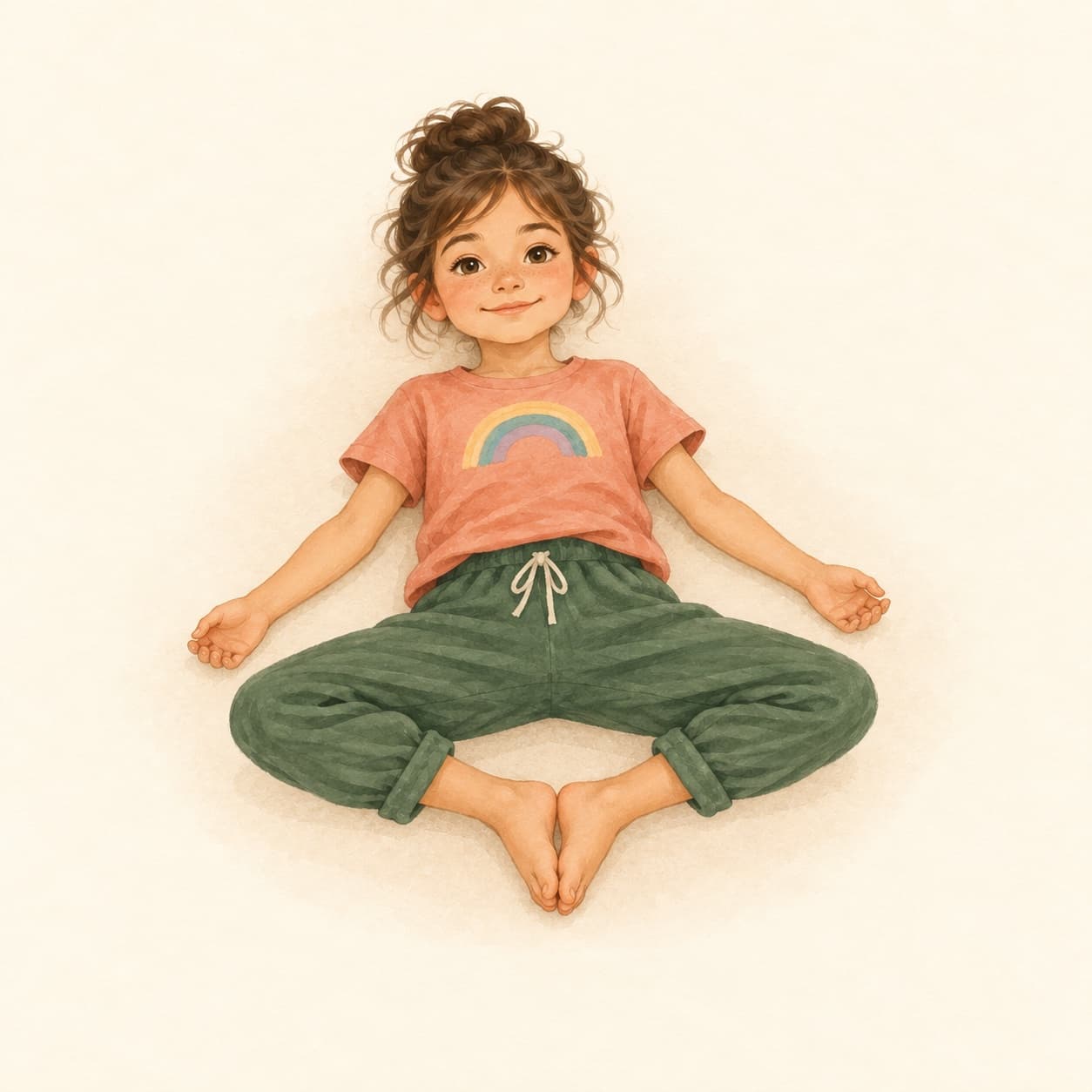 28
28Lie on your back, bring your soles together and let your knees open gently.
What you practise: Follow a few easy breaths as you rest.
Gentle option: Support your knees with cushions if that feels better.
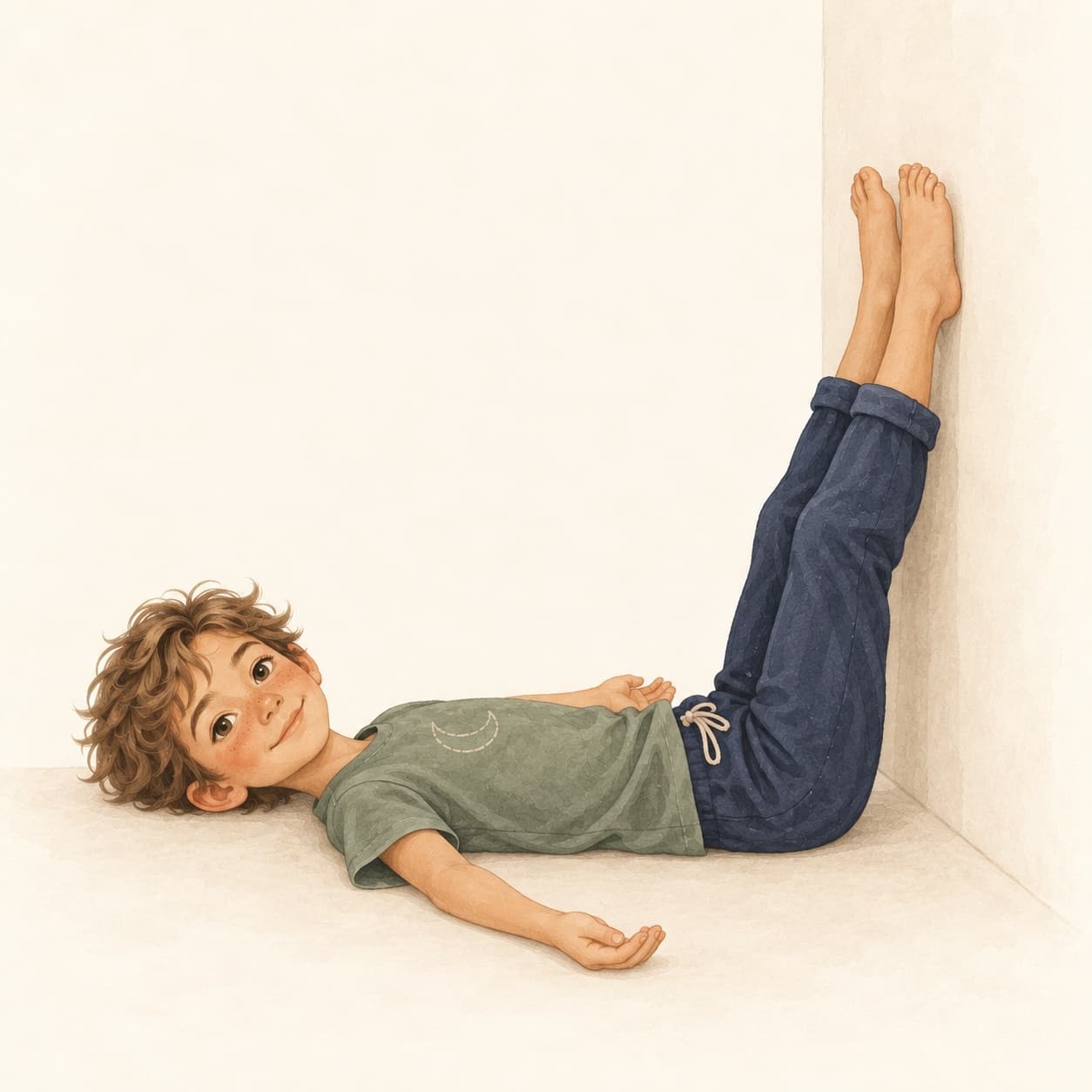 29
29Lie comfortably and let the wall support your legs.
What you practise: Take a moment to lie still and notice your breathing.
Gentle option: Move farther from the wall or bend your knees if that feels better.
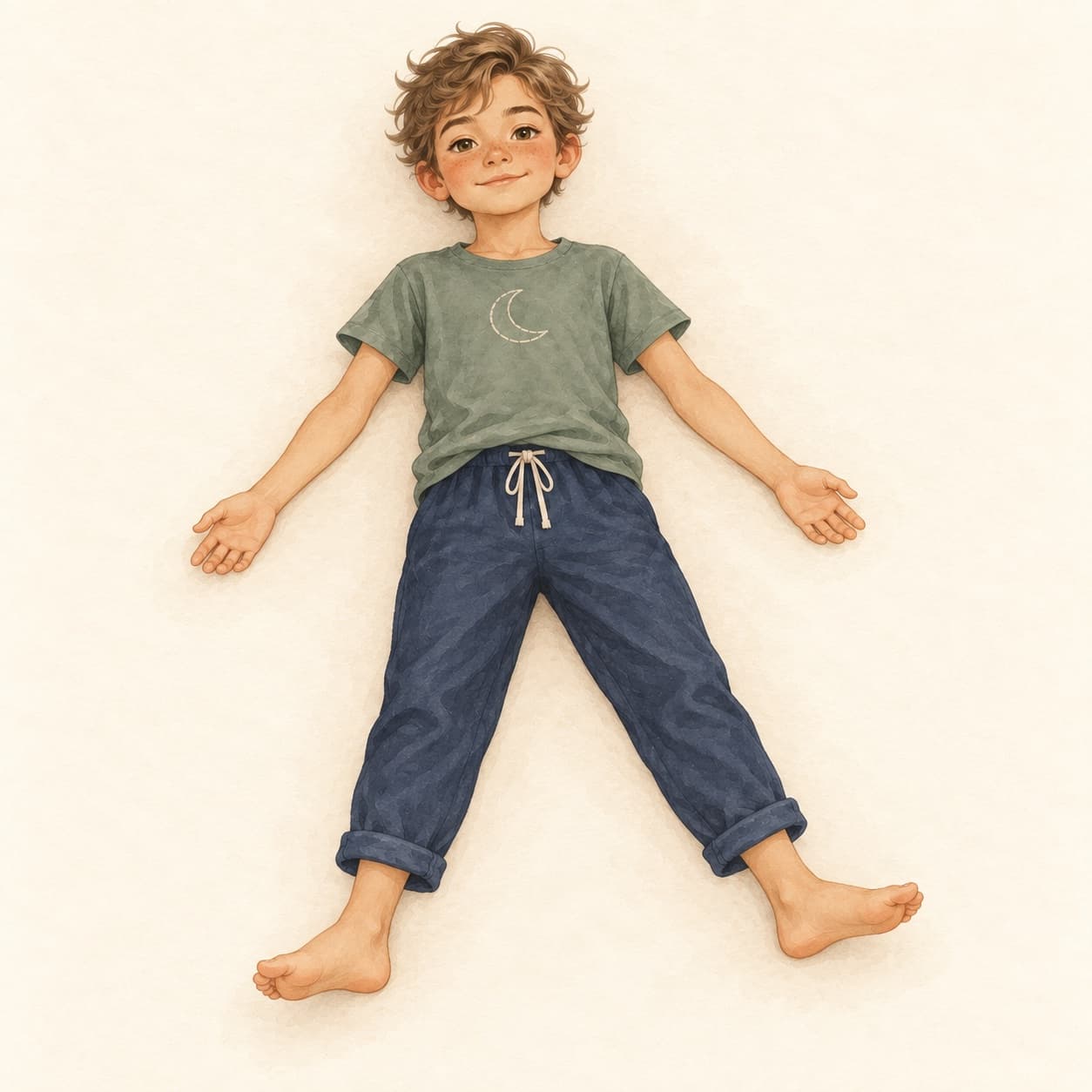 30
30Lie comfortably with relaxed arms and legs. Your eyes may stay open.
What you practise: Give your body a quiet ending.
Gentle option: A cushion or blanket may help; resting need not last long.
Need something different?
The familiar exercises from our earlier library are still here. You can try Cat and Cow separately, then gently move between them.
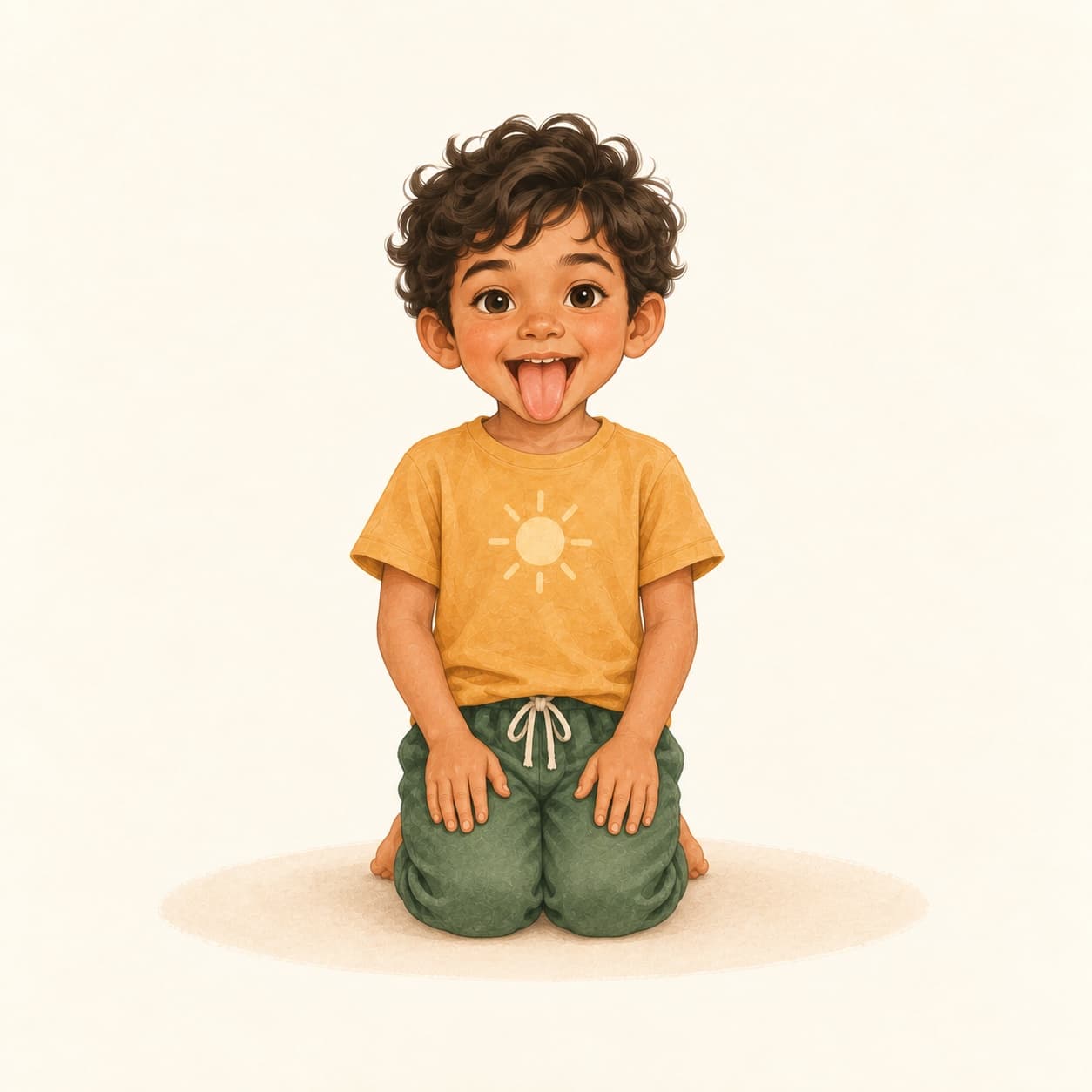
Give tension and frustration a playful way out.
Remember: Keep it gentle and stop if you feel light-headed.
Slow the breath and give a restless body a gentler rhythm.
Remember: Do not press or bounce. Support the knees with cushions if that feels better.
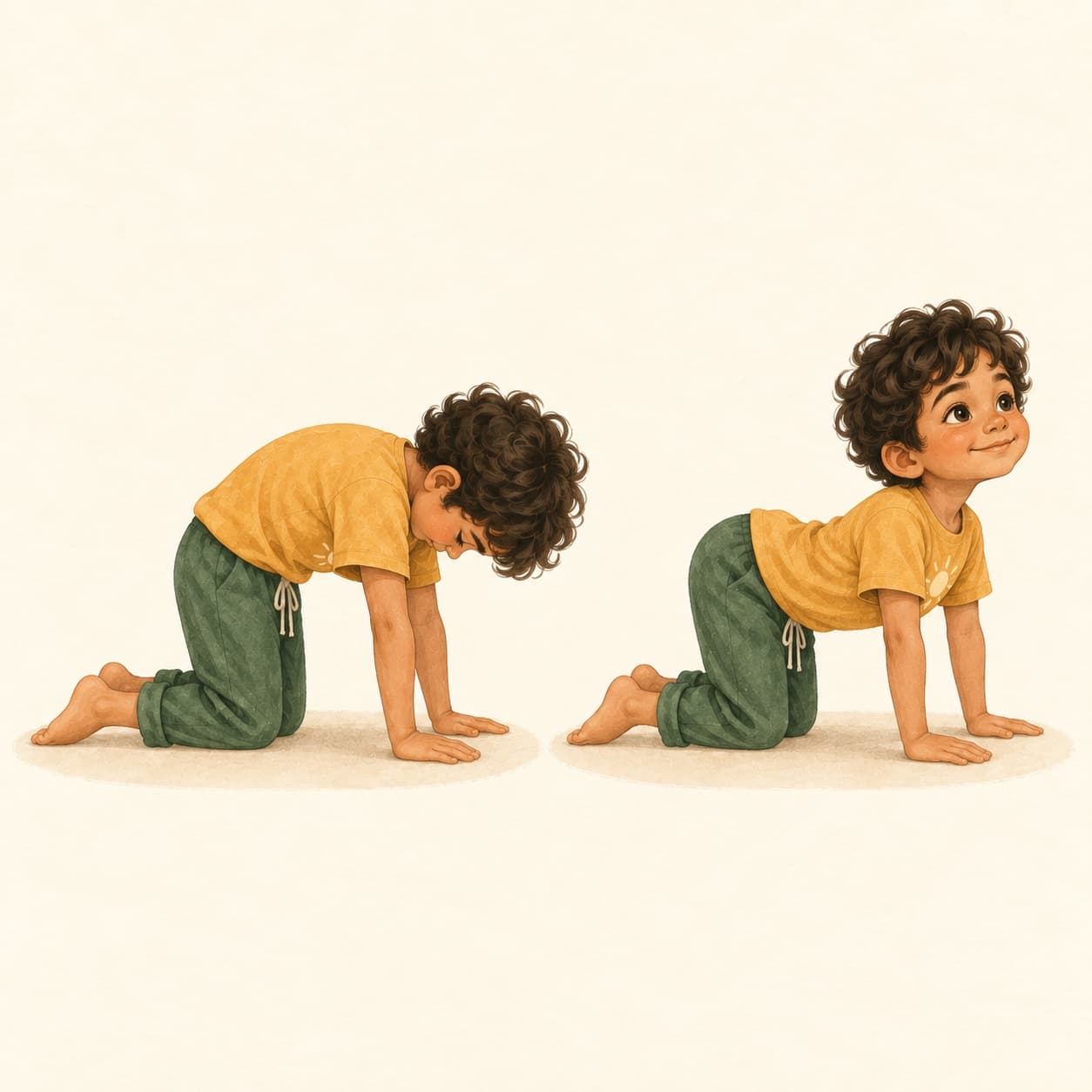
Move the back and shoulders after sitting and bring attention back to the body.
Remember: Keep the movement small and gentle. Stop if wrists, knees or back hurt.
In our school and BSO programmes, movement, breathing and the Rainbow Feelings method become a familiar part of the day.
These playful variations are written for children aged roughly 5 to 12. Let each child find a comfortable shape and keep practices brief for younger children.
No. Choose one or two poses that feel good today. This is about curious movement, not perfect shapes or completing a whole sequence.
Practise with adult supervision, never force a pose and stop if there is pain, dizziness or discomfort. A wall, chair or cushion can offer support.
Yes. The Mindful Kids uses kids yoga and breathing games in workshops and programmes for primary schools, BSO and childcare across Noord-Holland and nearby.
Important: These playful poses support education and general wellbeing; they are not medical treatment. Practise with adult supervision, never force a position and stop if there is pain, dizziness or discomfort.